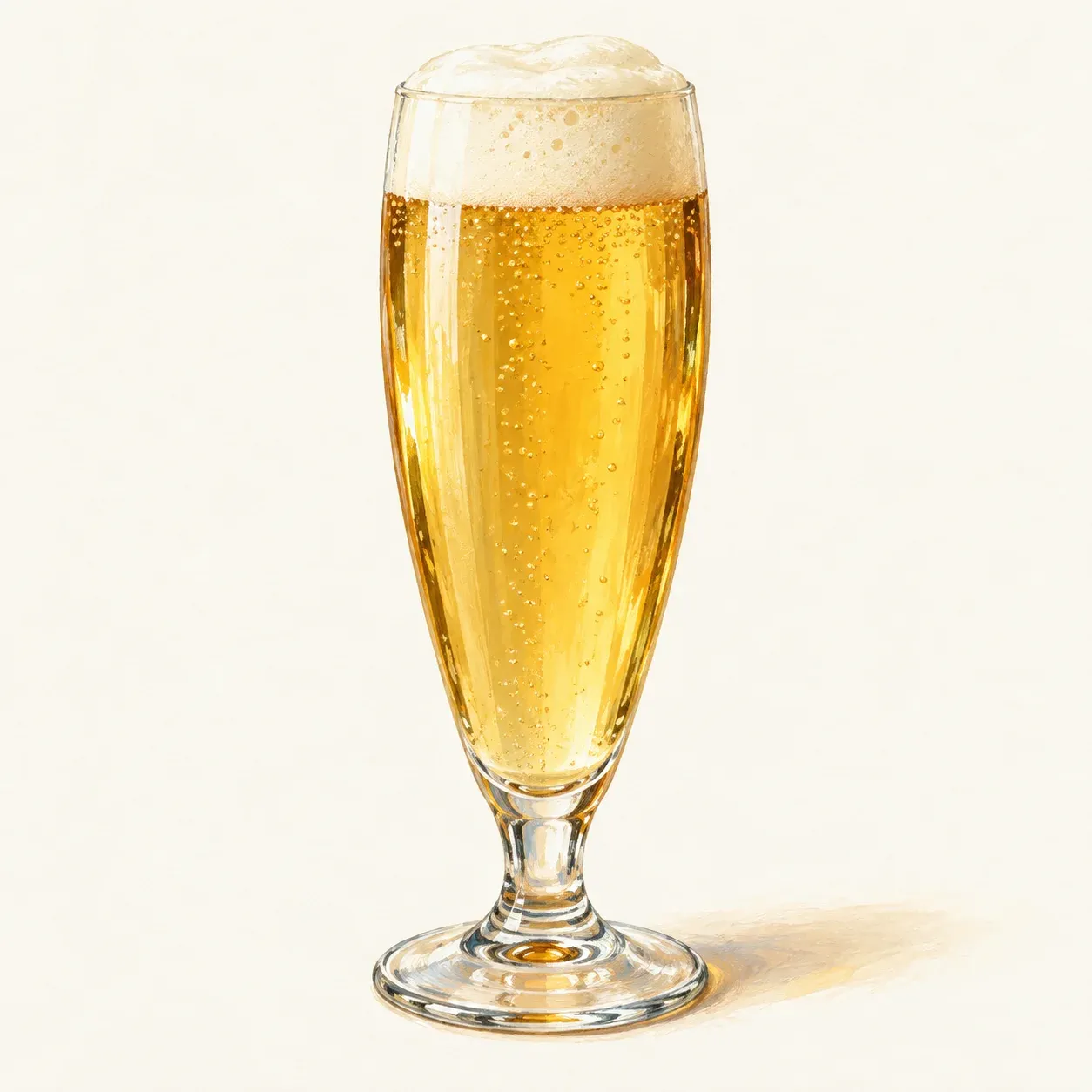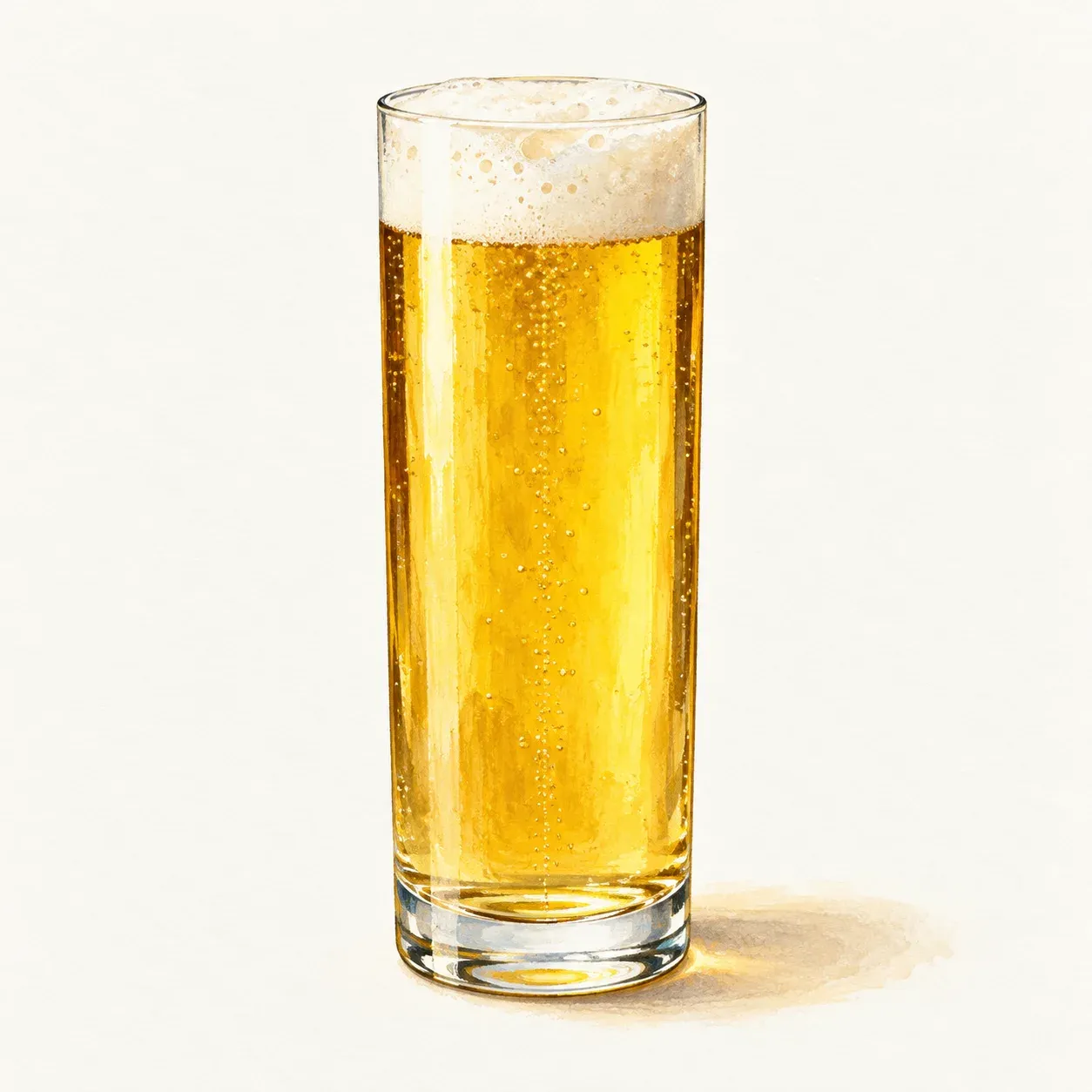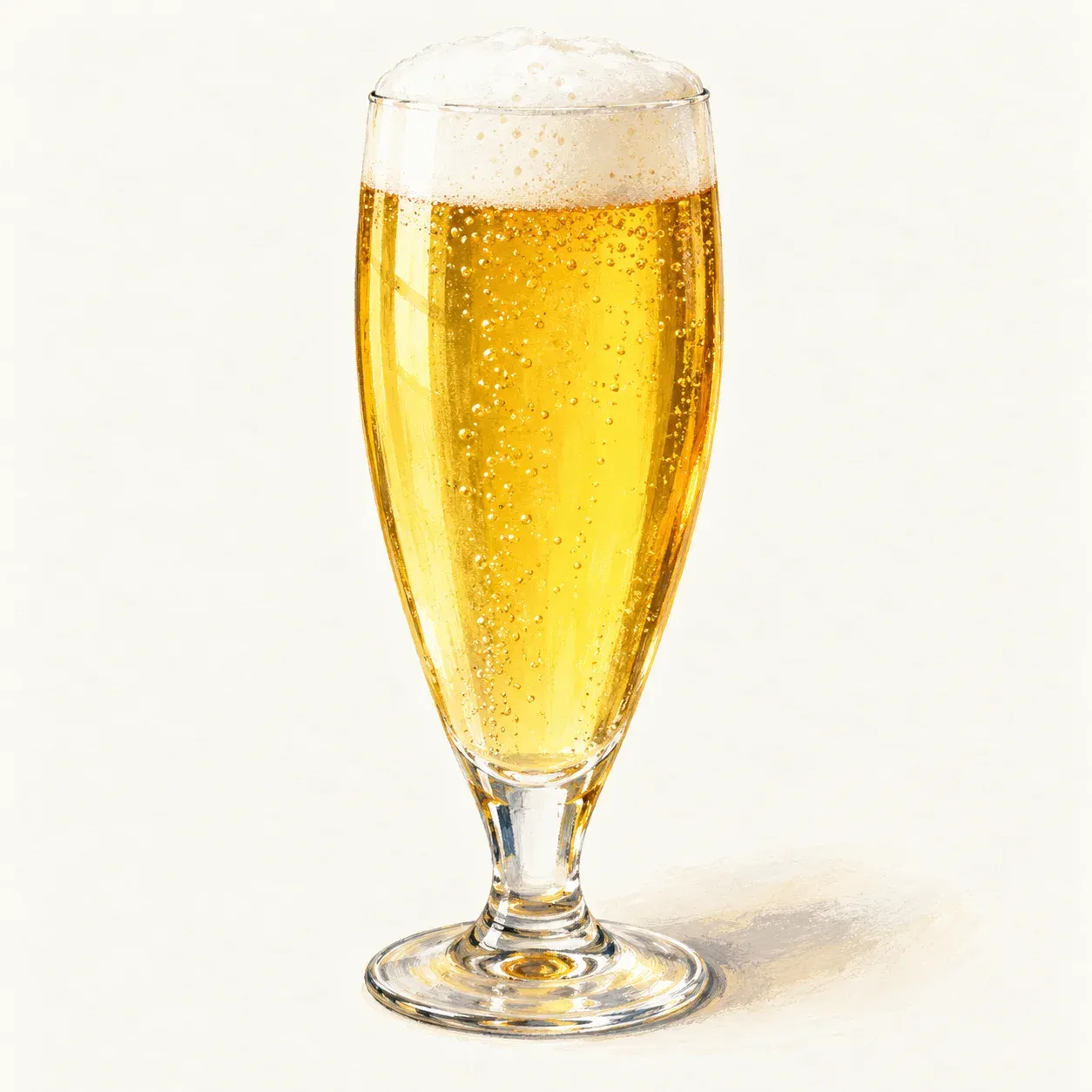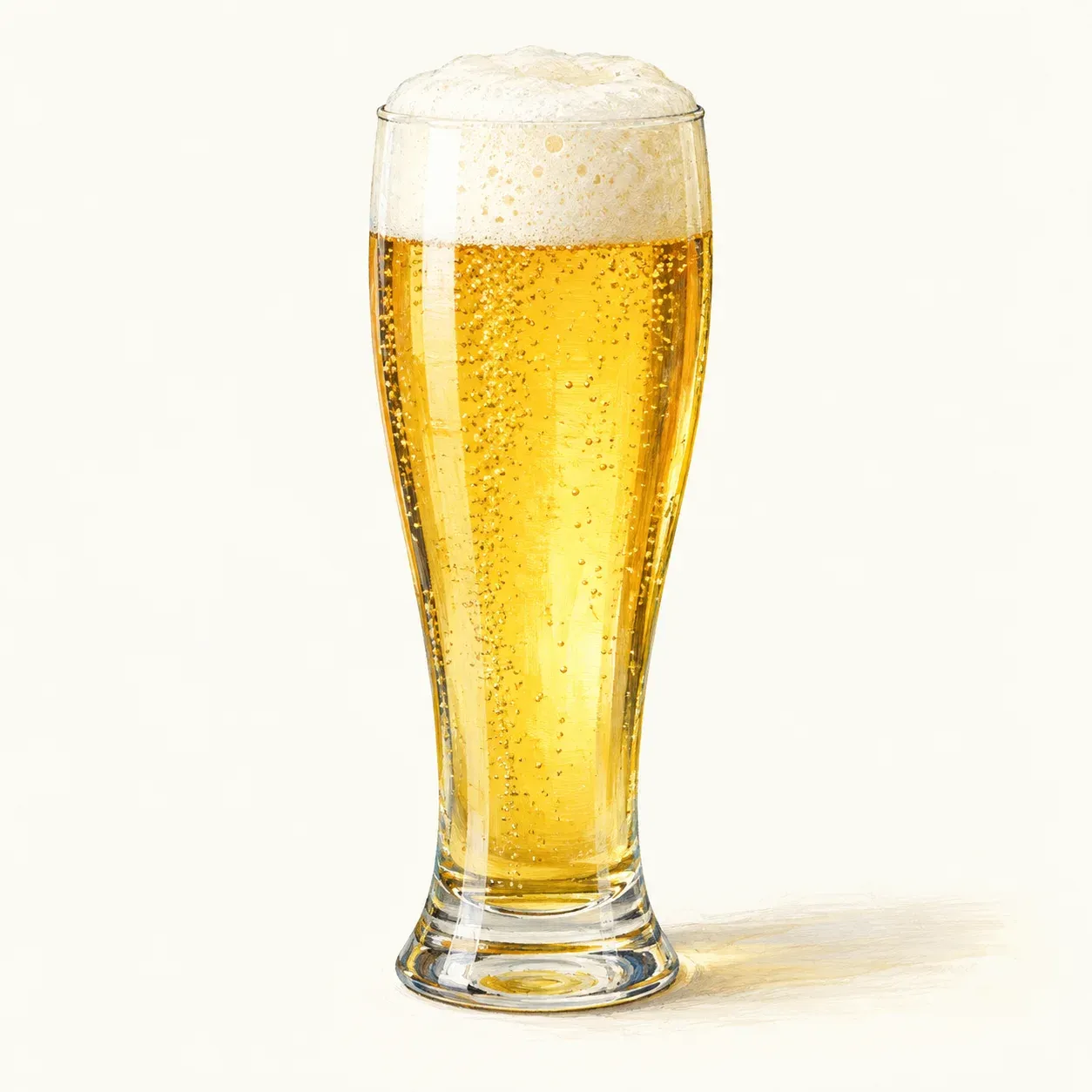
A German Pils is the drier, sharper cousin of the Czech original. It pours straw to deep yellow and crystal clear, under a white head that lasts. You get a short taste of malt, then the hops take over: flowery, spicy, herbal, with a bitterness that lingers and a clean, crisp finish. The carbonation runs high, so it drinks light.
Where it comes from
German brewers took the pale lager of Plzeň and changed it to suit their own water, which carries more minerals, and their own hops. They first brewed it in the early 1870s, and it spread after the Second World War, when German brewing schools taught modern methods. Germans write Pils to set it apart from the Czech Pilsner. With its Czech cousin, it is the ancestor of the pale lagers that most of the world drinks today.
The style shifts as you travel north. Bavarian Pils tastes softer, with more malt and late hops. Further north the beer turns paler, drier and more bitter, as the sulphate in the water rises.
How to serve it
Pour it at 4–7 °C into a tall pils glass or a flute, and give the head time to build. It goes with shellfish, chicken and salads, and with a white cheddar.
Next to its neighbours
Against a Czech Pilsner, a German Pils is lighter in colour and body, drier, crisper, more bitter in the finish and more carbonated. A Munich Helles shares its malt but leans on it, with less hop and a softer finish. An international pale lager has less of everything: hops, malt and bitterness.
German Pils in numbers
- Original gravity
- 1.044–1.050
- Final gravity
- 1.008–1.013
- Food
- Shellfish, chicken, salads; white cheddar; shortbread
- Classic examples
- Jever Pilsener; König Pilsener; Rothaus Pils; Schönramer Pils; Paulaner Pils; Trumer Pils
- BJCP style
- 5D German Pils
Sources
Checked .
- 5D. German Pils, 2021 Beer Style Guidelines — Beer Judge Certification Program
- German-Style Pilsner — CraftBeer.com, Brewers Association