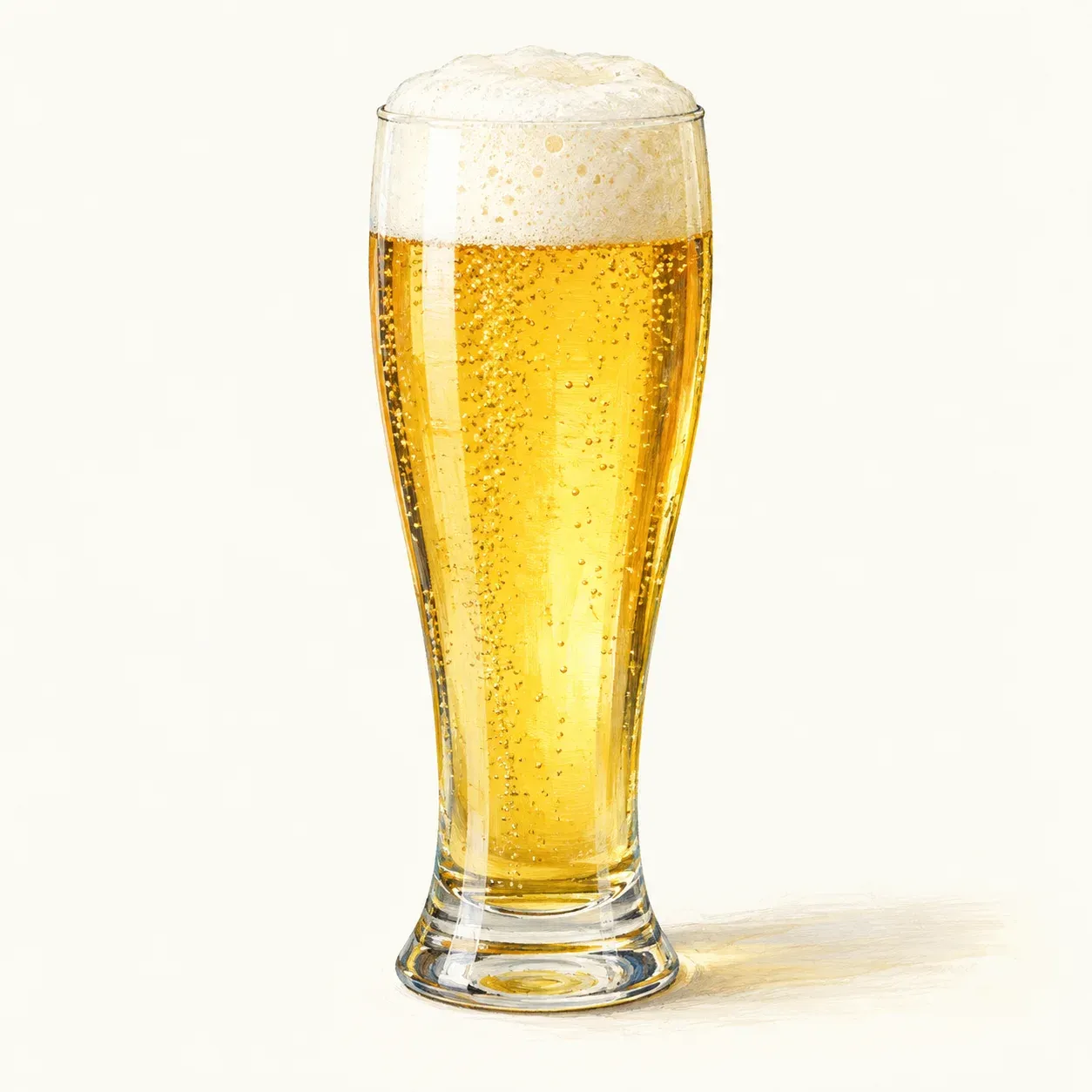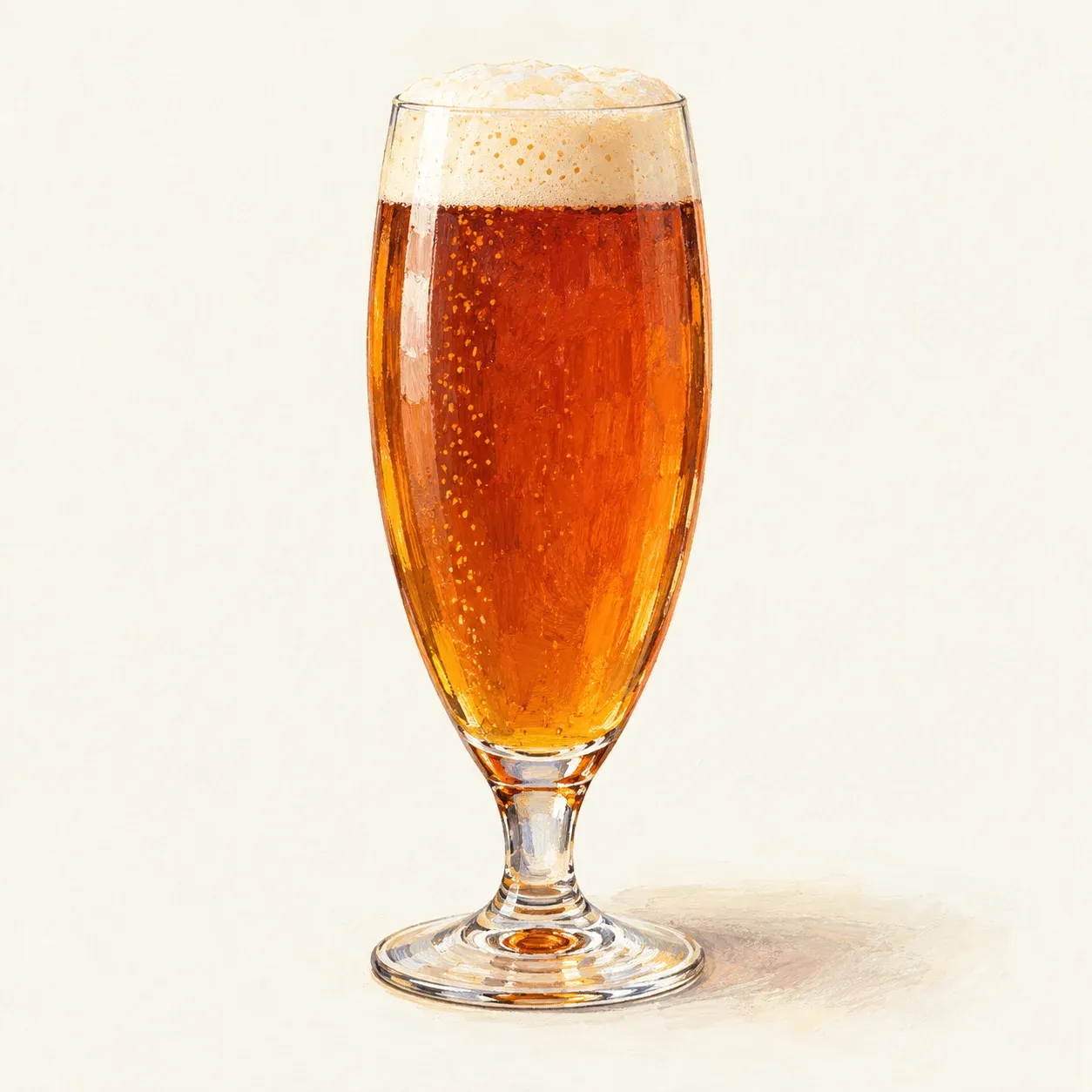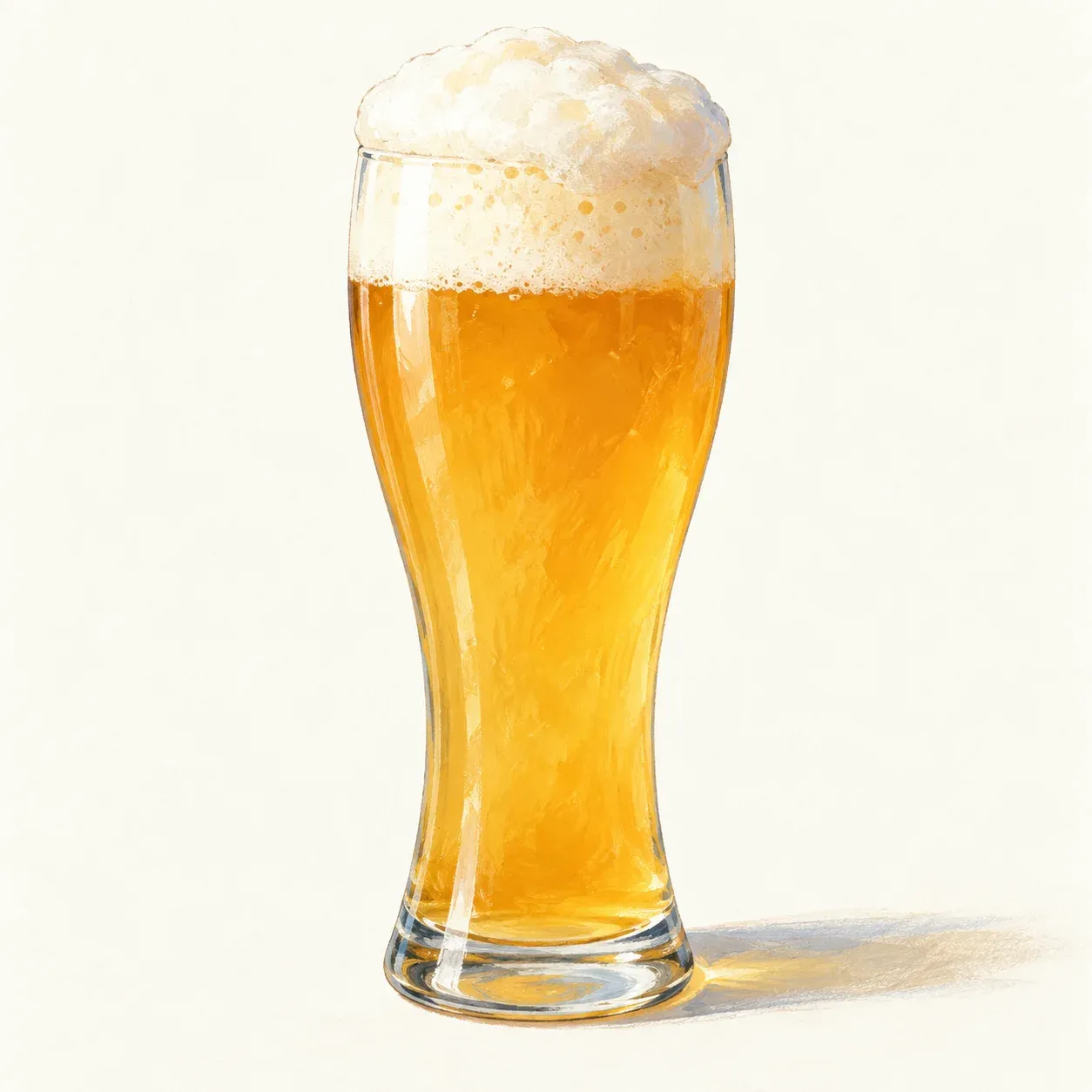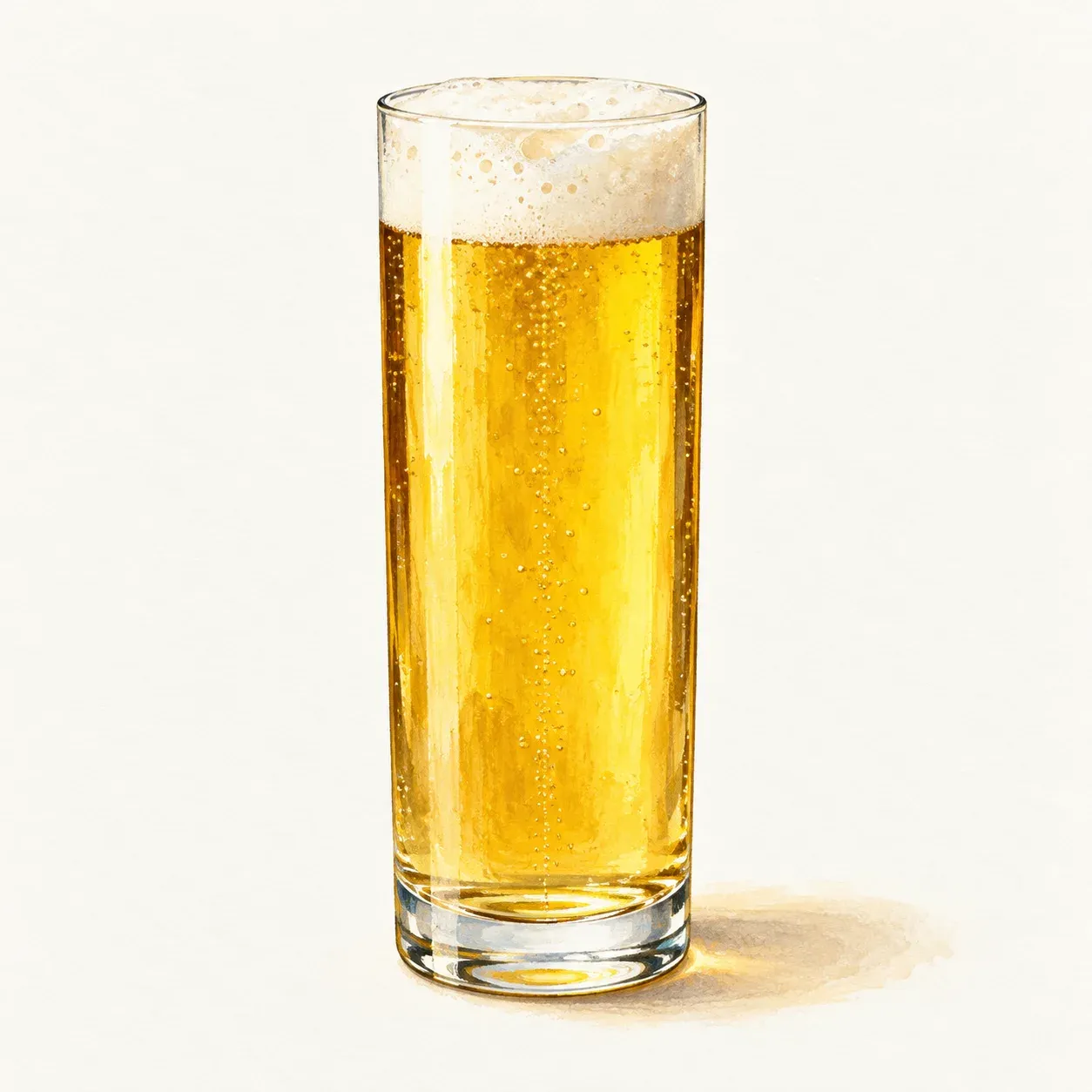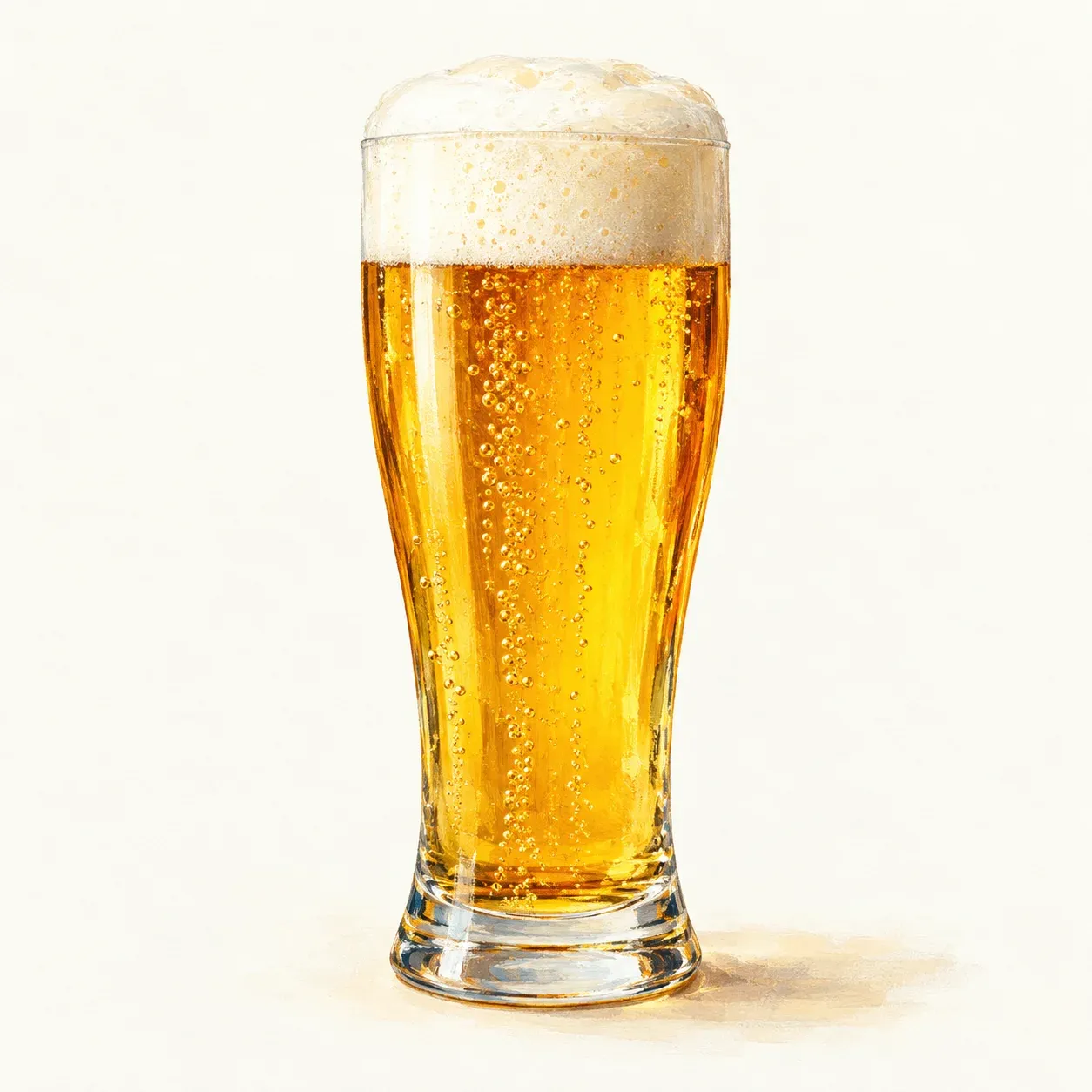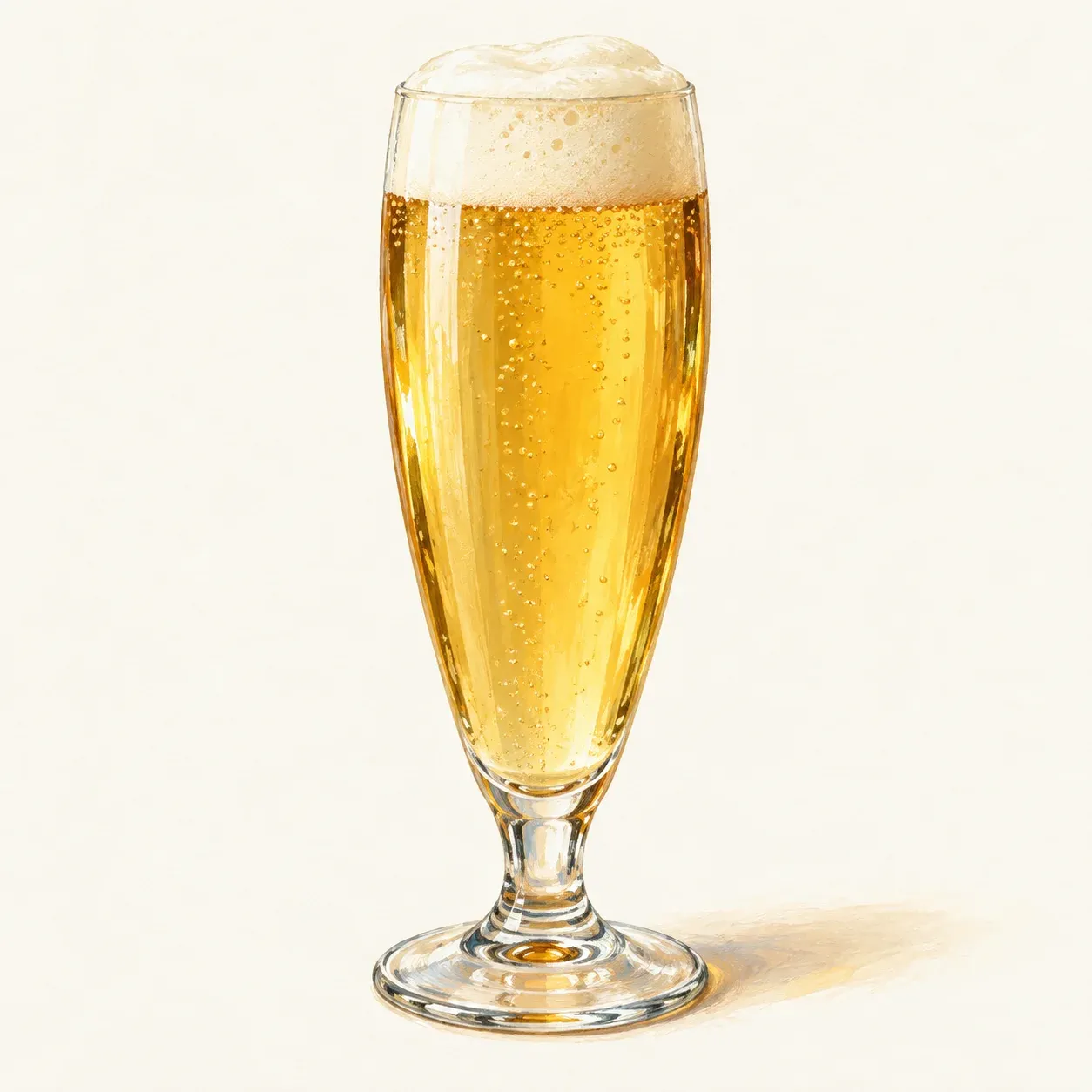
Hell means light, and a Munich Helles pours pale yellow to pale gold, clear, with a creamy white head. You taste soft, grainy malt that hints at sweetness without being sweet, a low bitterness and a dry, gentle finish. The hops stay in the background, a little spicy or floral. Munich treats it as an everyday beer.
Where it comes from
Munich brewers created Helles in 1894 to compete with pale Pilsner-type beers. Spaten usually gets the credit for the first one. The style caught on in southern Germany more than in the north. Helles poured in Munich itself tends to be lighter than versions brewed elsewhere, and you may see it sold as Helles Lagerbier.
Brewers use continental Pilsner malt, traditional German hops and a clean lager yeast. Freshness matters: the malt and hop aromas fade with time, which is why the beer tastes best close to the brewery.
How to serve it
Pour it at 7–10 °C into a flute. Try it with samosas or a mild cheese such as Colby, and baklava for dessert.
Next to its neighbours
A Helles has more body and malt than a German Pils, and less hop and bite. It shares its balance with Munich Dunkel, the dark companion beer, but stays pale and drier. A Festbier, poured at the Oktoberfest, is stronger and fuller.
Munich Helles in numbers
- Classic example
- Spaten
- Original gravity
- 1.044–1.048
- Final gravity
- 1.006–1.012
- Food
- Samosas; Colby; baklava
- Classic examples
- Augustiner Lagerbier Hell; Spaten Münchner Hell; Weihenstephaner Original Helles; Hacker-Pschorr Münchner Gold; Paulaner Münchner Lager; Schönramer Hell
- BJCP style
- 4A Munich Helles
Sources
Checked .
- 4A. Munich Helles, 2021 Beer Style Guidelines — Beer Judge Certification Program
- German-Style Helles — CraftBeer.com, Brewers Association