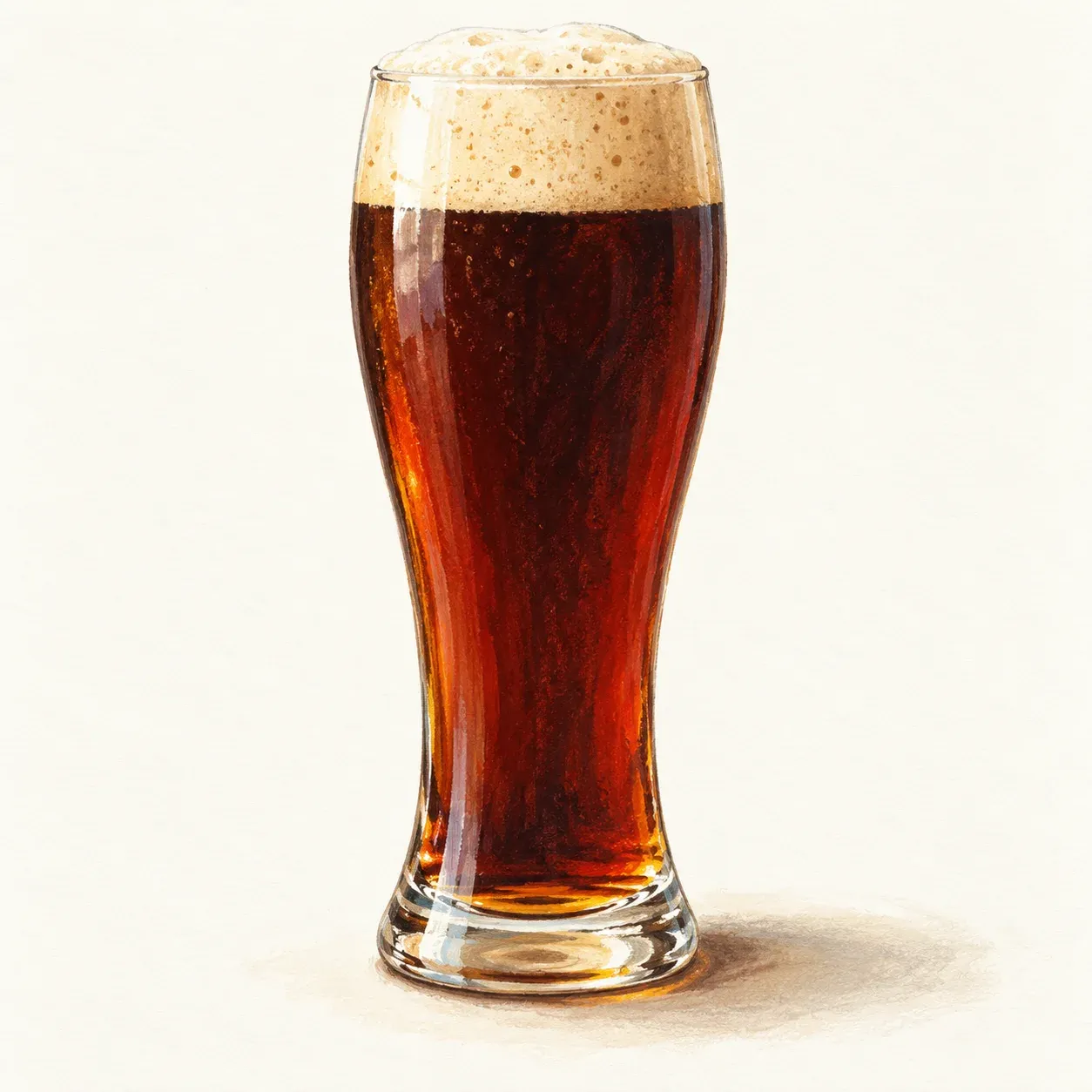
Munich Dunkel
Munich Dunkel: a brown Bavarian lager with toasted, bready malt and no roast, developed at Spaten in the 1830s. Strength, bitterness, glass and classic examples.
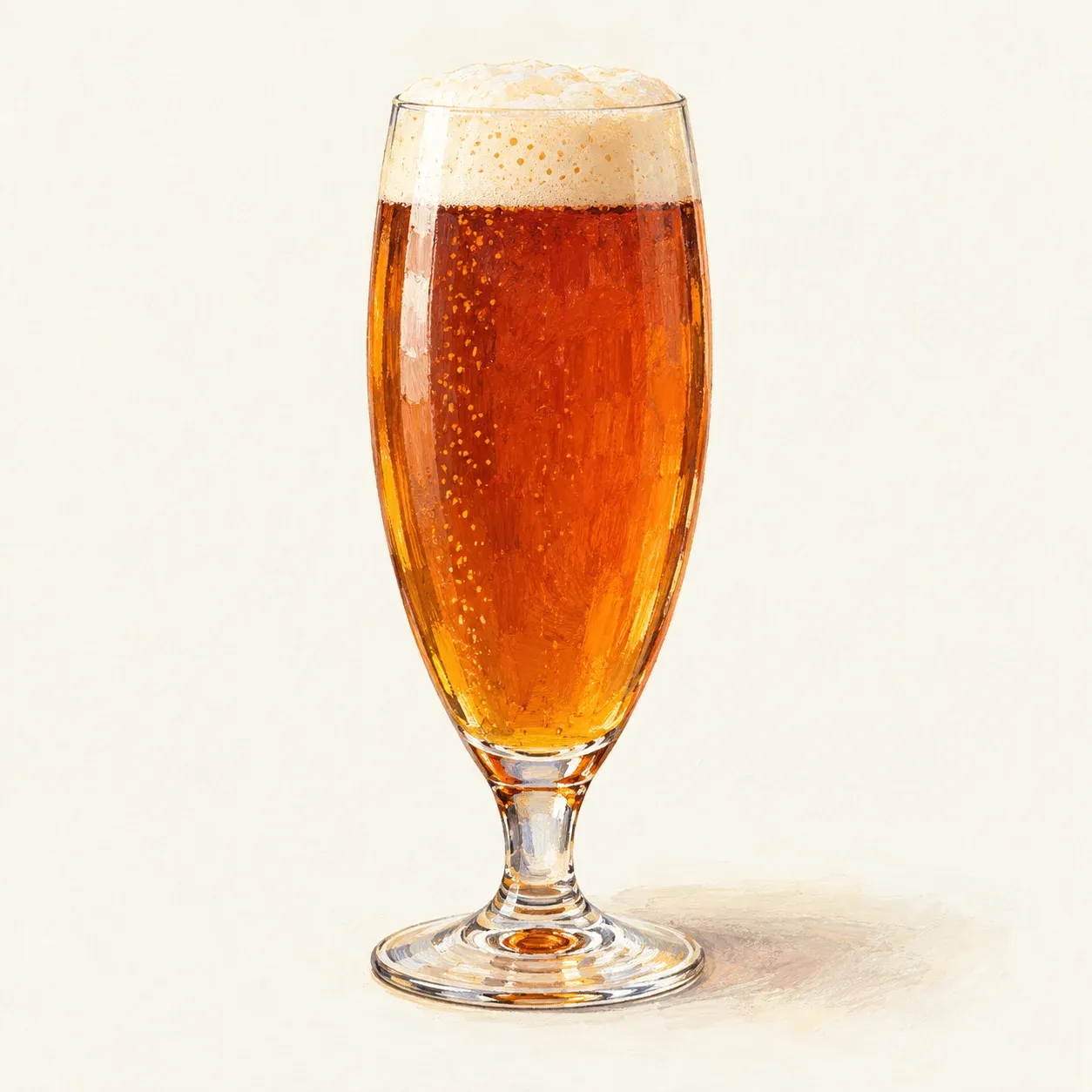
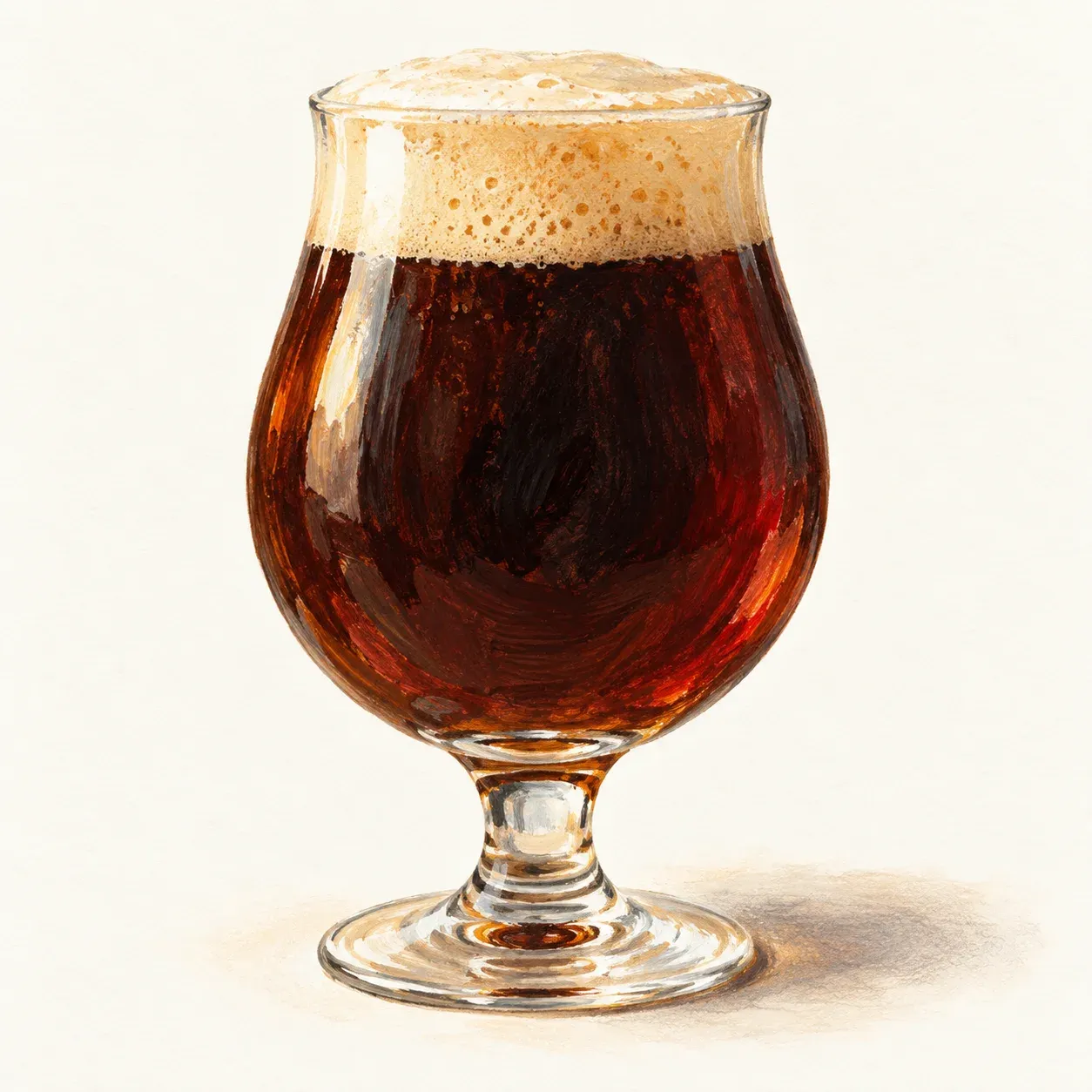
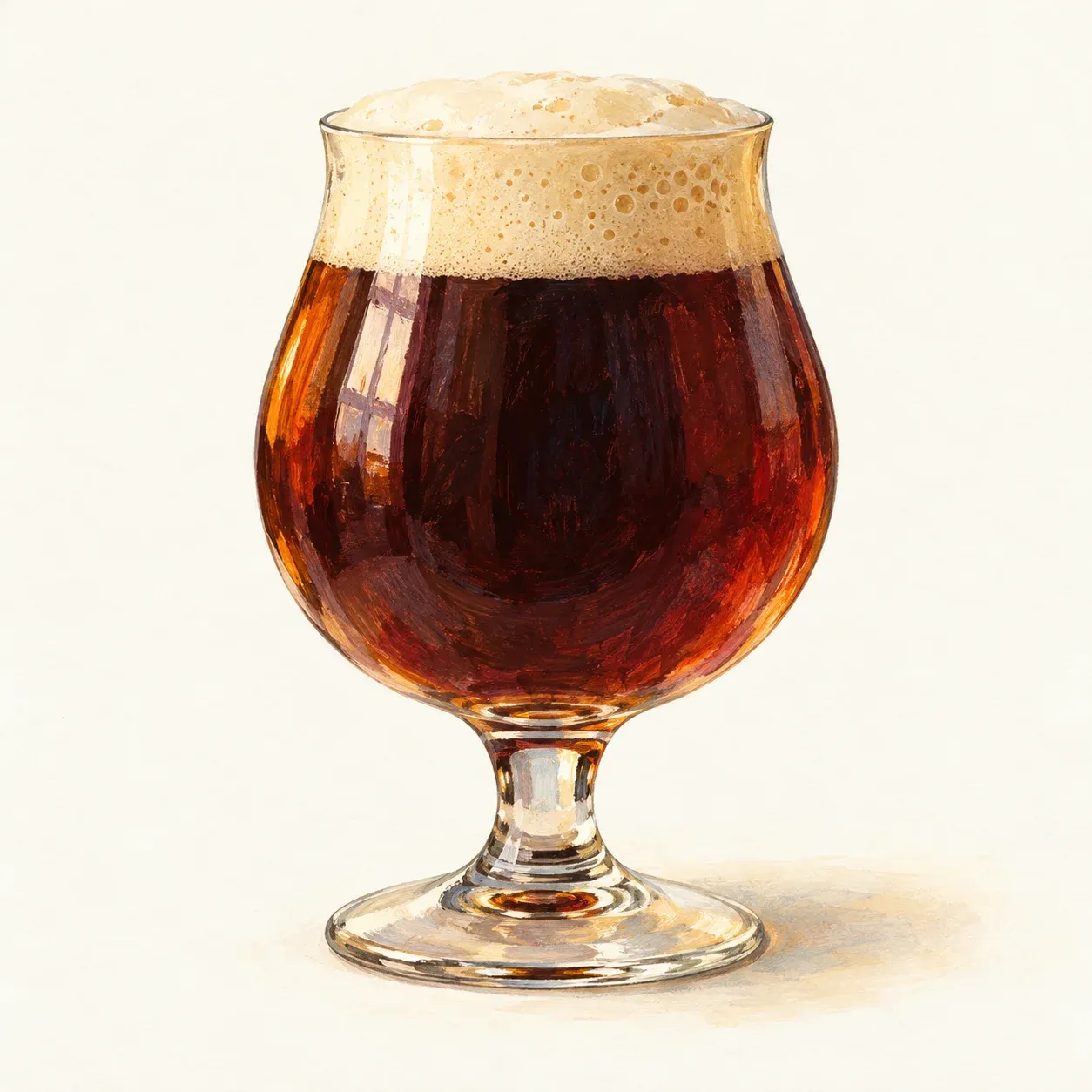
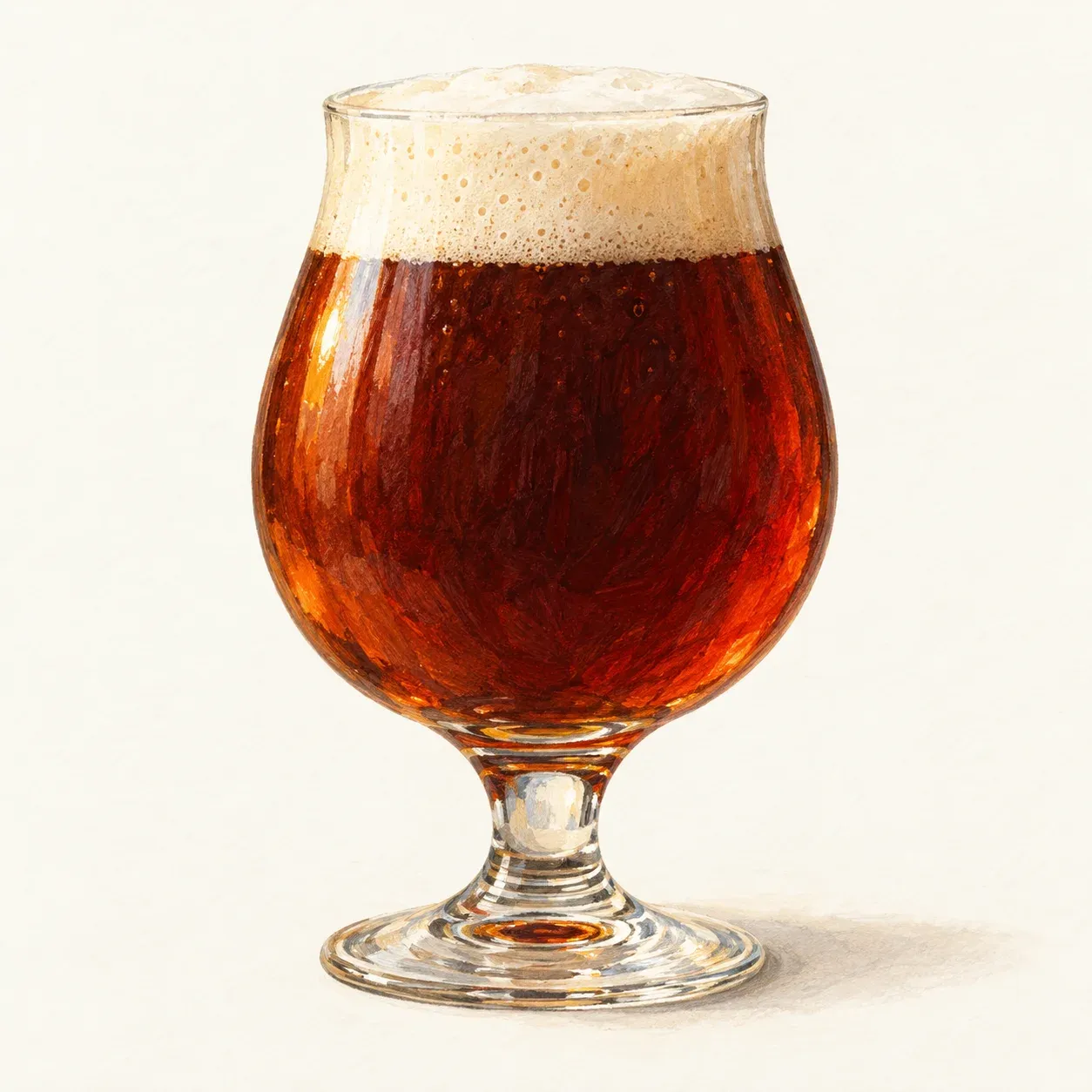
A Munich Dunkel pours deep copper to dark brown, often with a red tint, under a creamy tan head. The dark malt brings bread crust, toast and a soft richness, and the brewer keeps burnt and coffee notes out of it, and the bitterness stays low. The finish runs dry, so a second glass follows the first.
Where it comes from
Spaten developed Dunkel in Munich in the 1830s, once maltsters could make Munich malt. It followed the dark regional beers of the time and became the brown lager of Bavaria, popular in Franconia as well as in Munich. Franconian versions taste more bitter than those from Munich.
Brewers build it on Munich malt, with a little specialty malt for colour and depth, German hops and lager yeast, and a traditional decoction mash. It is the dark companion to Munich Helles.
How to serve it
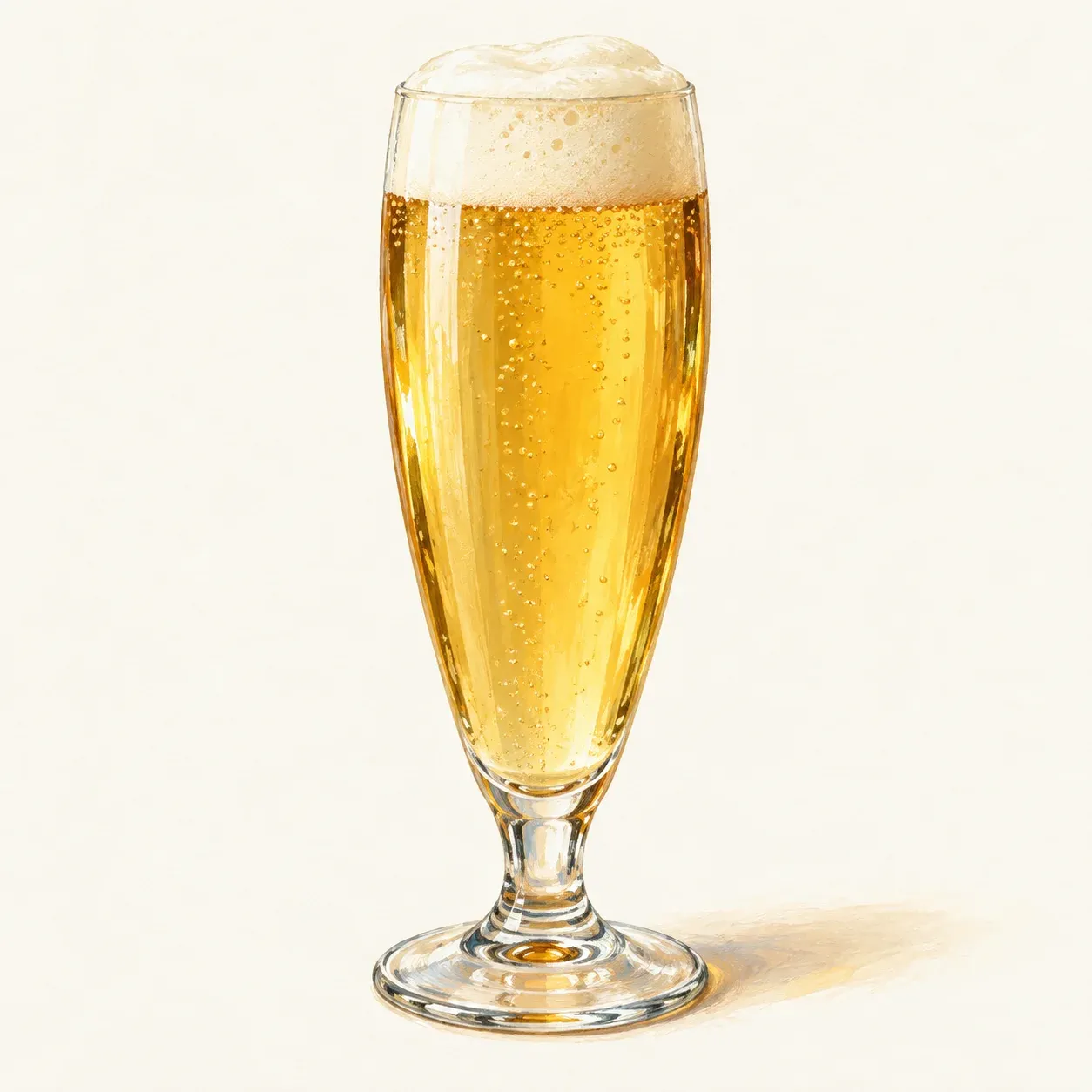
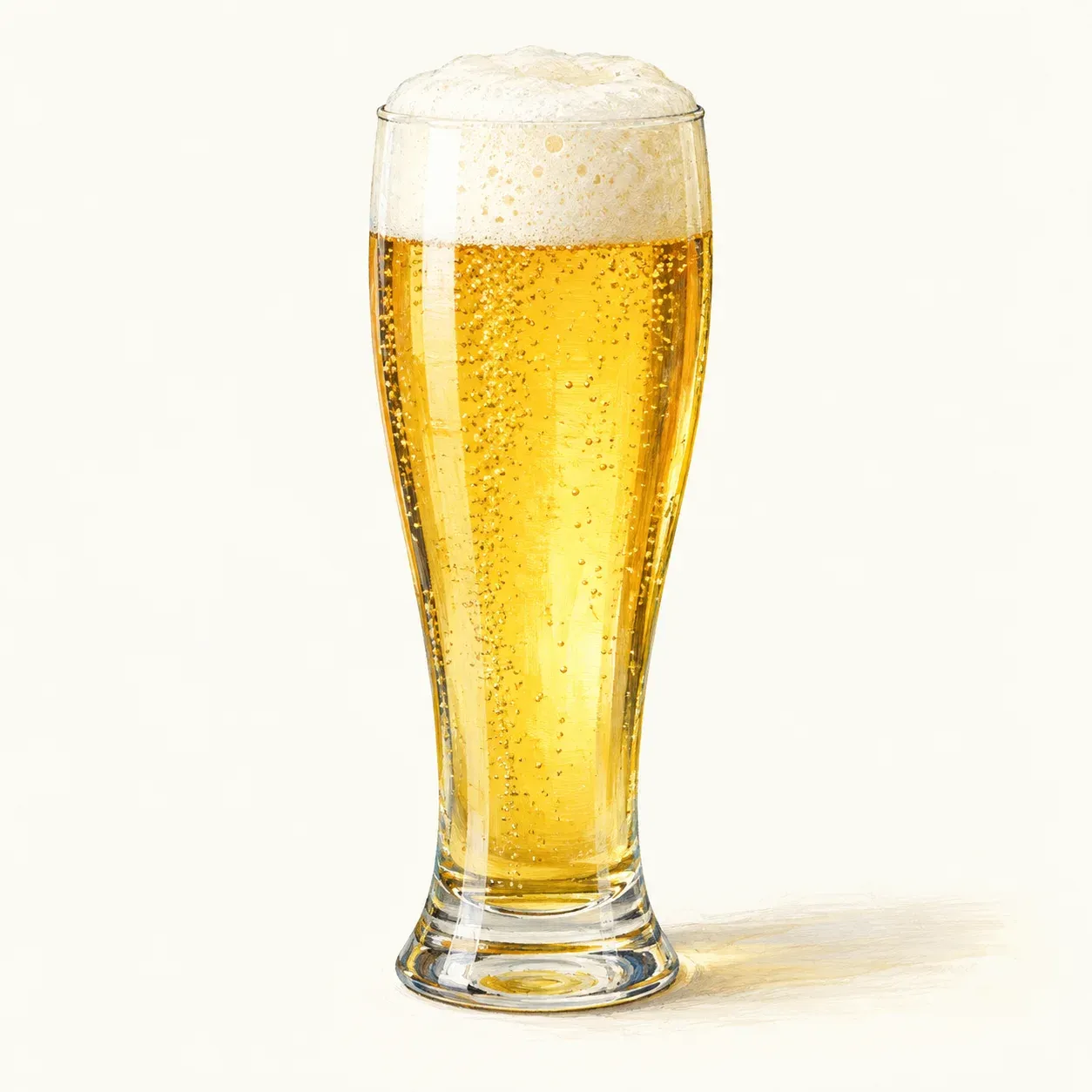
Pour it at 7–10 °C into a tall glass. Bavarian food suits it: sausages, roasted vegetables, a washed-rind Munster.
Next to its neighbours
A Dunkel shares the balance of a Helles but adds the richer malt of the darker grain. A Schwarzbier brings roast and more bitterness. A dunkles bock is stronger and more intense, and a Czech dark lager has more hops and less malt.
Munich Dunkel in numbers
- Classic example
- Spaten
- Original gravity
- 1.048–1.056
- Final gravity
- 1.010–1.016
- Food
- Sausages, roasted vegetables; washed-rind Munster; candied ginger cake
- Classic examples
- Ayinger Altbairisch Dunkel; Hofbräuhaus Dunkel; Hacker-Pschorr Münchner Dunkel; Ettaler Kloster-Dunkel; Weltenburger Kloster Barock-Dunkel
- BJCP style
- 8A Munich Dunkel
Sources
Checked .
- 8A. Munich Dunkel, 2021 Beer Style Guidelines — Beer Judge Certification Program
- German-Style Dunkel — CraftBeer.com, Brewers Association