Belgian Dubbel
Belgian Dubbel: a reddish-copper abbey ale with rich malt, dried fruit and a dry finish, first brewed at Westmalle in 1922. Strength, bitterness, glass and examples.
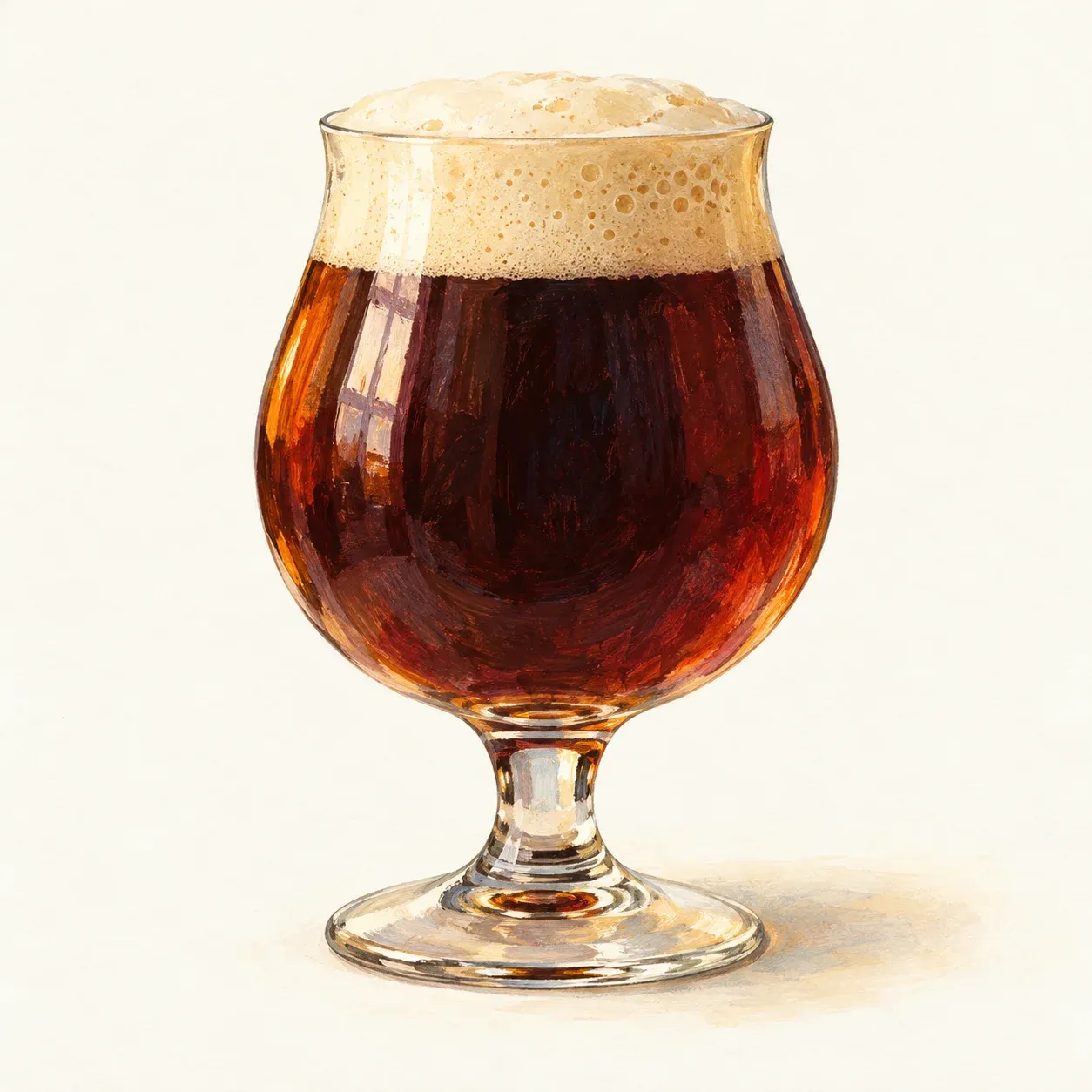
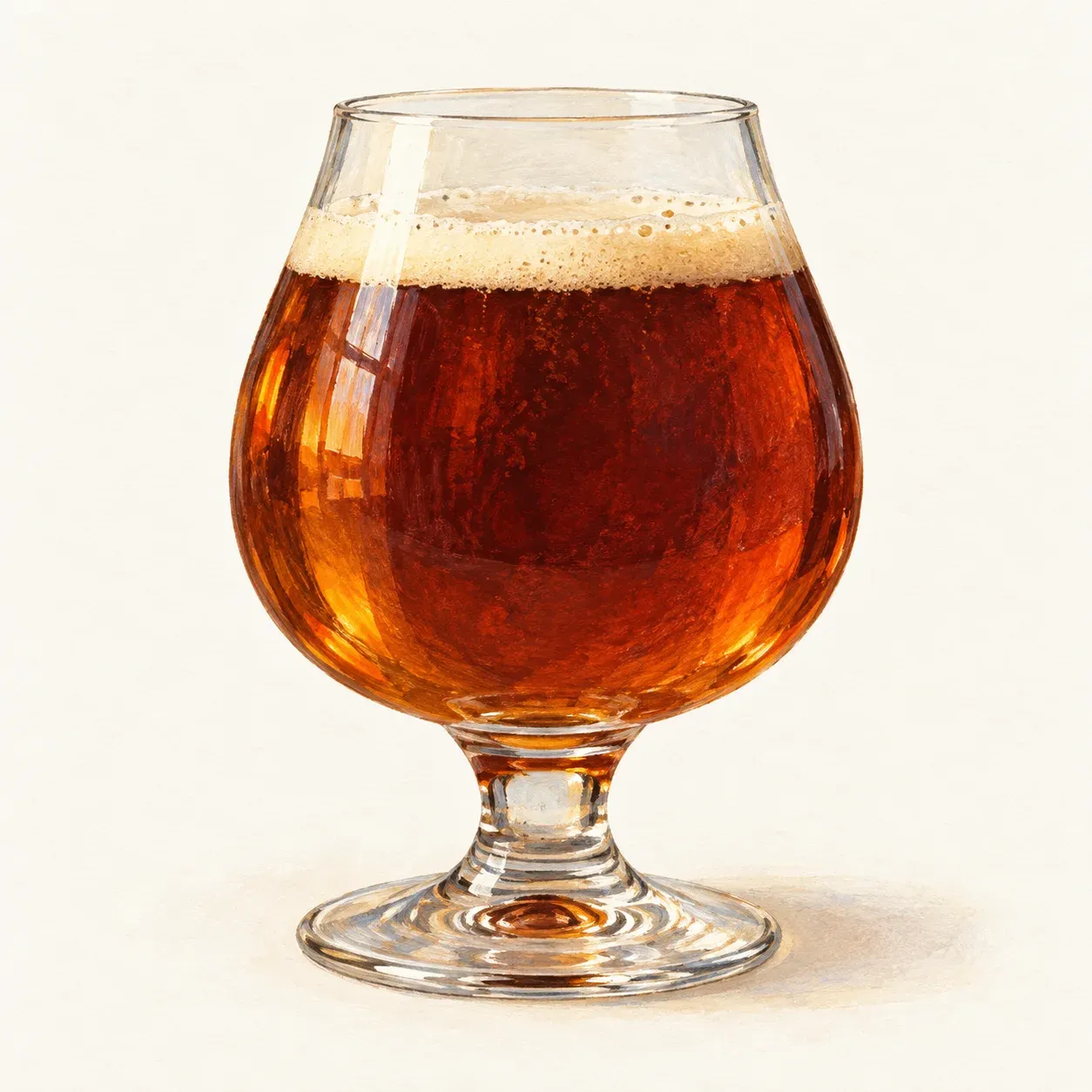
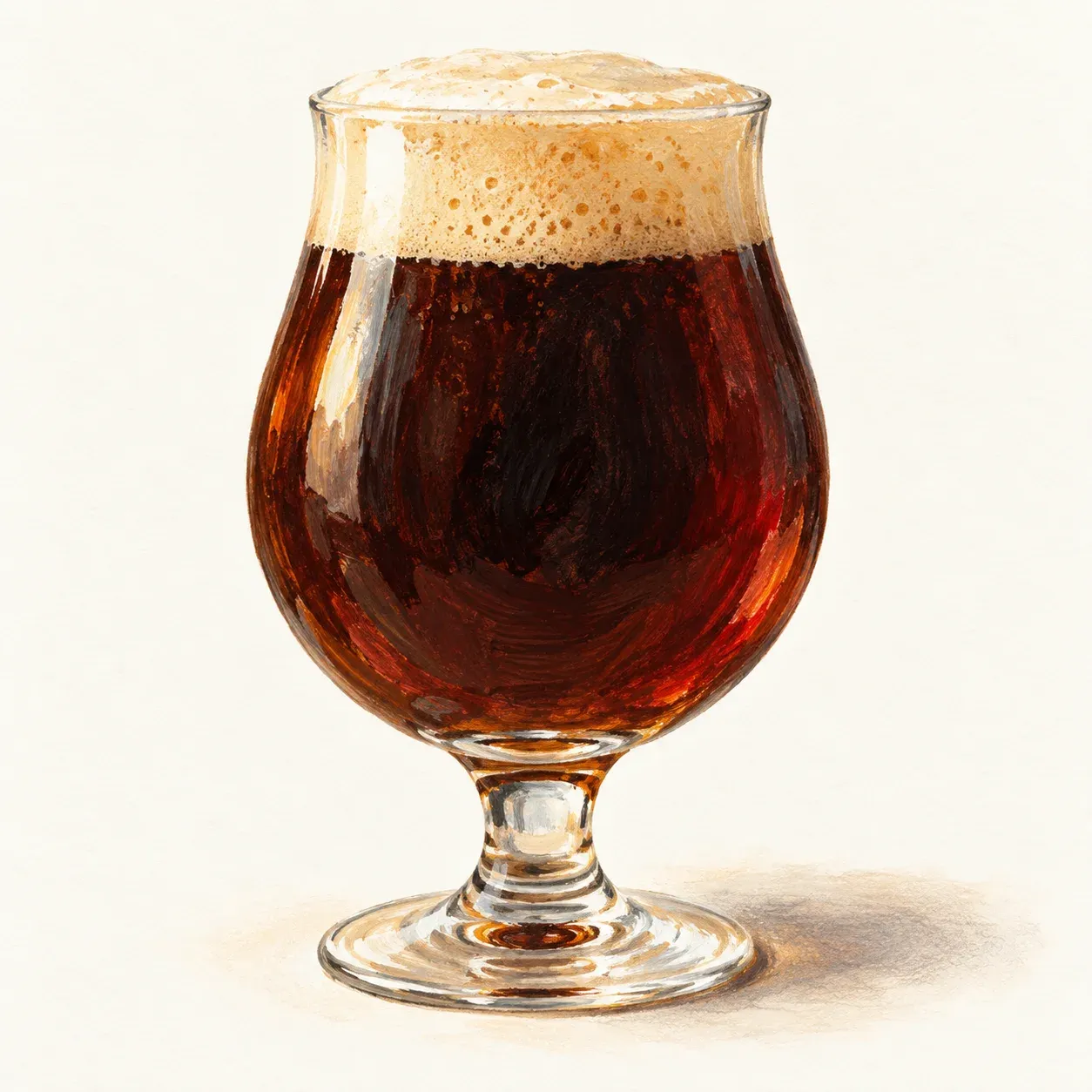
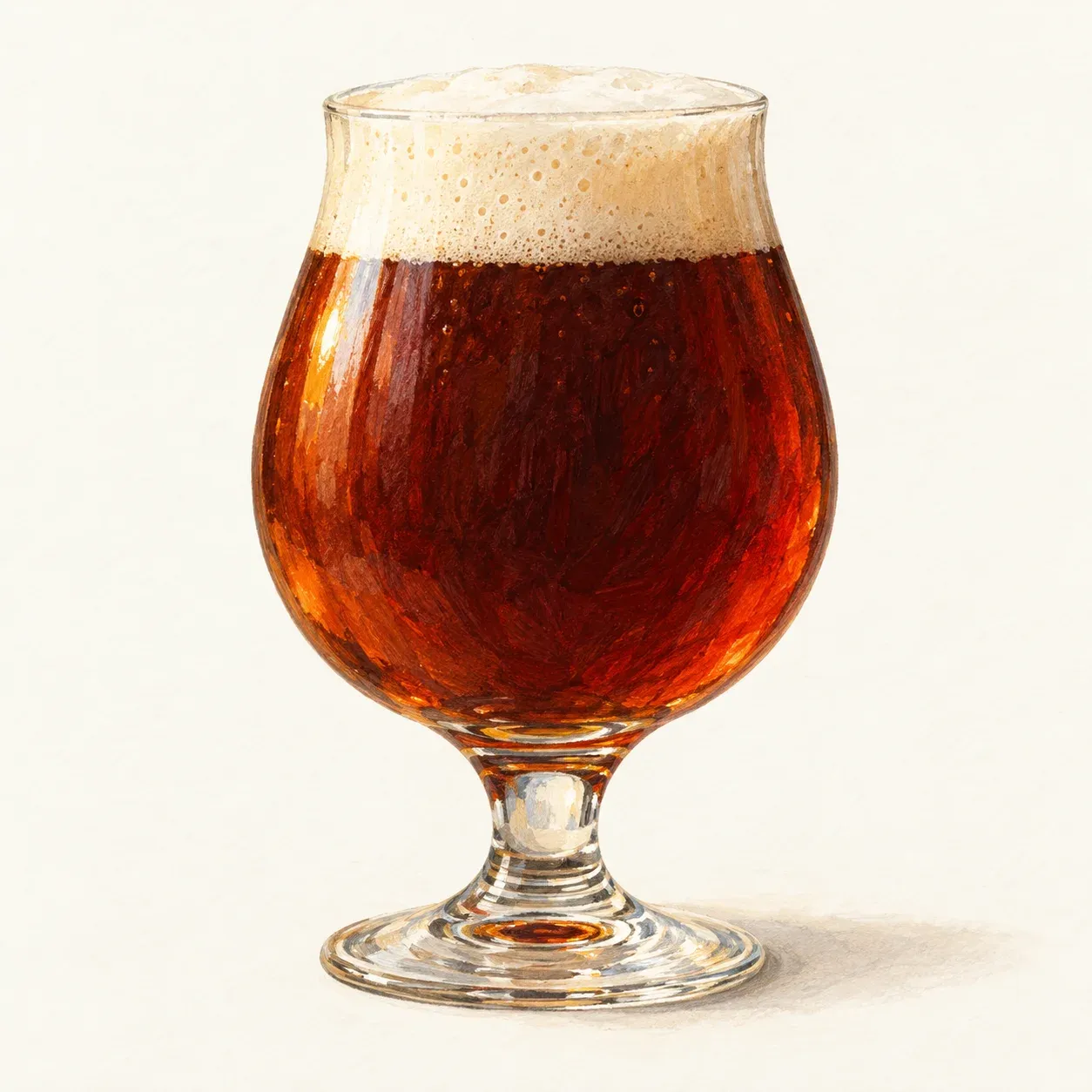
A dubbel pours dark amber to copper, with a deep reddish glow, under a large, long-lasting off-white head. You taste rich malt, then raisin, plum and dried fruit from the yeast, with a little spice. The bitterness stays low and the malt leads, yet the finish comes out dry. It can seem sweet because of that low bitterness, but most dubbels ferment dry.
Where it comes from
Belgian brewers made dark, strong beers long before, but the modern dubbel traces back to the double brown beer Westmalle first brewed in 1922, when the brewery restarted after the First World War. Other examples date from after the Second World War.
The grain bill seems complex in the glass but often stays simple: much of the colour and depth comes from caramelised sugar syrup or unrefined sugar, and the yeast adds the fruit and spice. Most commercial examples sit at 6.5–7%.
How to serve it
Pour it at 10–13 °C into a tulip glass. Try it with apple-smoked sausage or a washed-rind cheese, and milk chocolate to finish.
Next to its neighbours
A dubbel matches a Belgian Blond in strength and balance, with richer malt and more fruit. It is less strong and intense than a Belgian Dark Strong Ale, and resembles a dunkles bock brewed with Belgian yeast and sugar.
Belgian Dubbel in numbers
- Classic example
- Westmalle
- Original gravity
- 1.062–1.075
- Final gravity
- 1.008–1.018
- Food
- Apple-smoked sausage; washed-rind cheeses; milk chocolate
- Classic examples
- Westmalle Dubbel; Chimay Red; Rochefort 6; St. Bernardus Pater 6; La Trappe Dubbel; Corsendonk Bruin
- BJCP style
- 26B Belgian Dubbel
Sources
Checked .
- 26B. Belgian Dubbel, 2021 Beer Style Guidelines — Beer Judge Certification Program
- Belgian-Style Dubbel — CraftBeer.com, Brewers Association