Czech Pilsner
Czech Pilsner: a gold lager with bready malt and a soft, spicy hop bitterness, first brewed in Plzeň in 1842. Strength, bitterness, glass and classic examples.
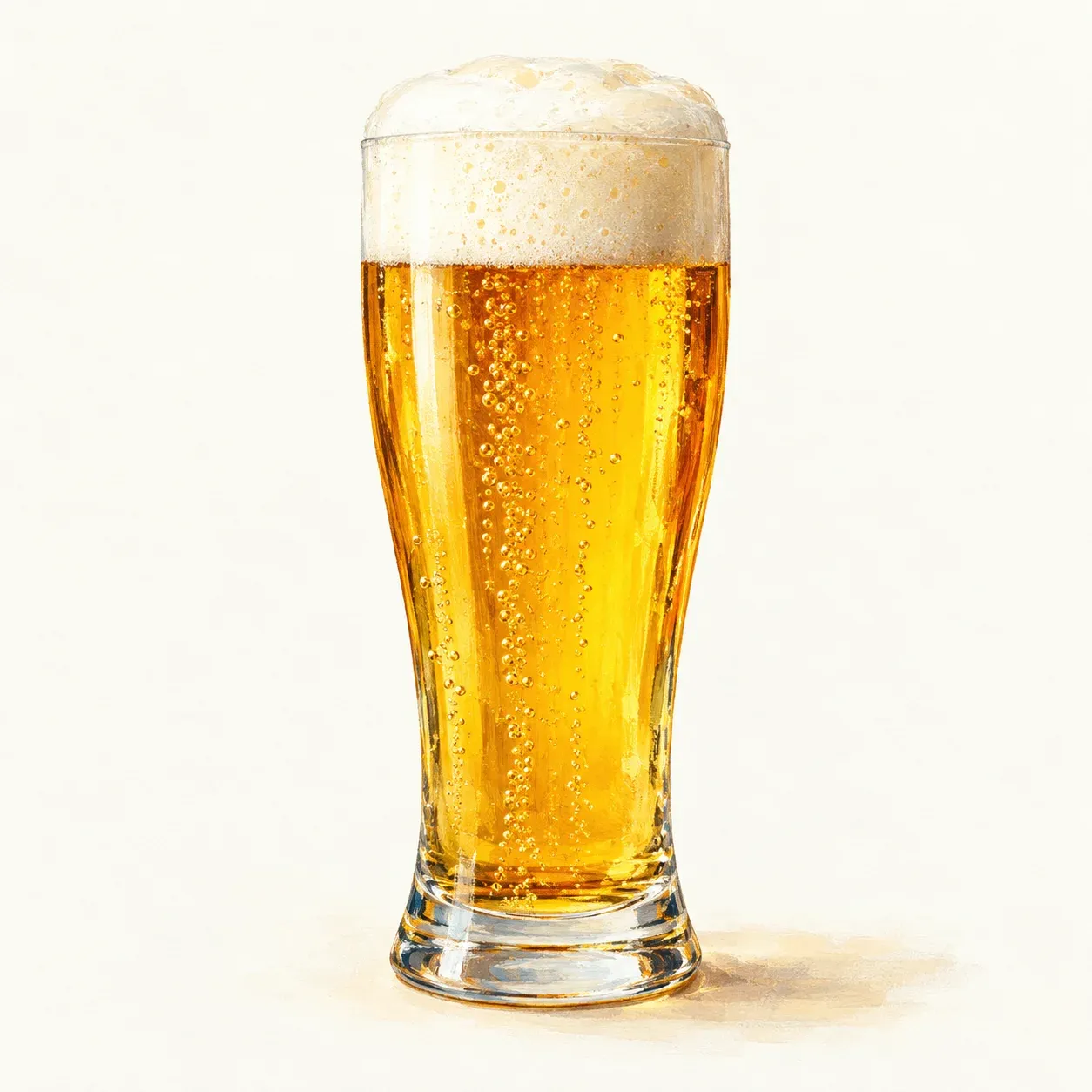
A Czech pilsner pours deep gold under a dense, creamy head. You taste bread and a touch of caramel from the malt first, then a firm bitterness with soft edges and the spicy, herbal note of Czech hops. The finish stays with you for a while. In a Czech pub you order a světlý ležák, a pale lager; the strongest versions go by světlé speciální pivo.
Where it comes from
In 1842 the burghers of Plzeň (Pilsen), tired of the town’s beer, built a new brewhouse and hired the Bavarian brewer Josef Groll. His pale lager became Pilsner Urquell. Lager yeast gave it its clean taste; malt kilned the English way, paler than the Bavarian malts of the day, gave it the colour. Pilsner Urquell writes that Groll almost certainly used Haná, a barley from the plains of Moravia.
Plzeň’s water matters as much. It holds little sulphate or carbonate, so a brewer can add plenty of hops and still get a round bitterness instead of a harsh one. In the Czech Republic only Pilsner Urquell and Gambrinus carry the name Pilsner. The rest of the country’s pale lagers sell as ležák.
How to serve it
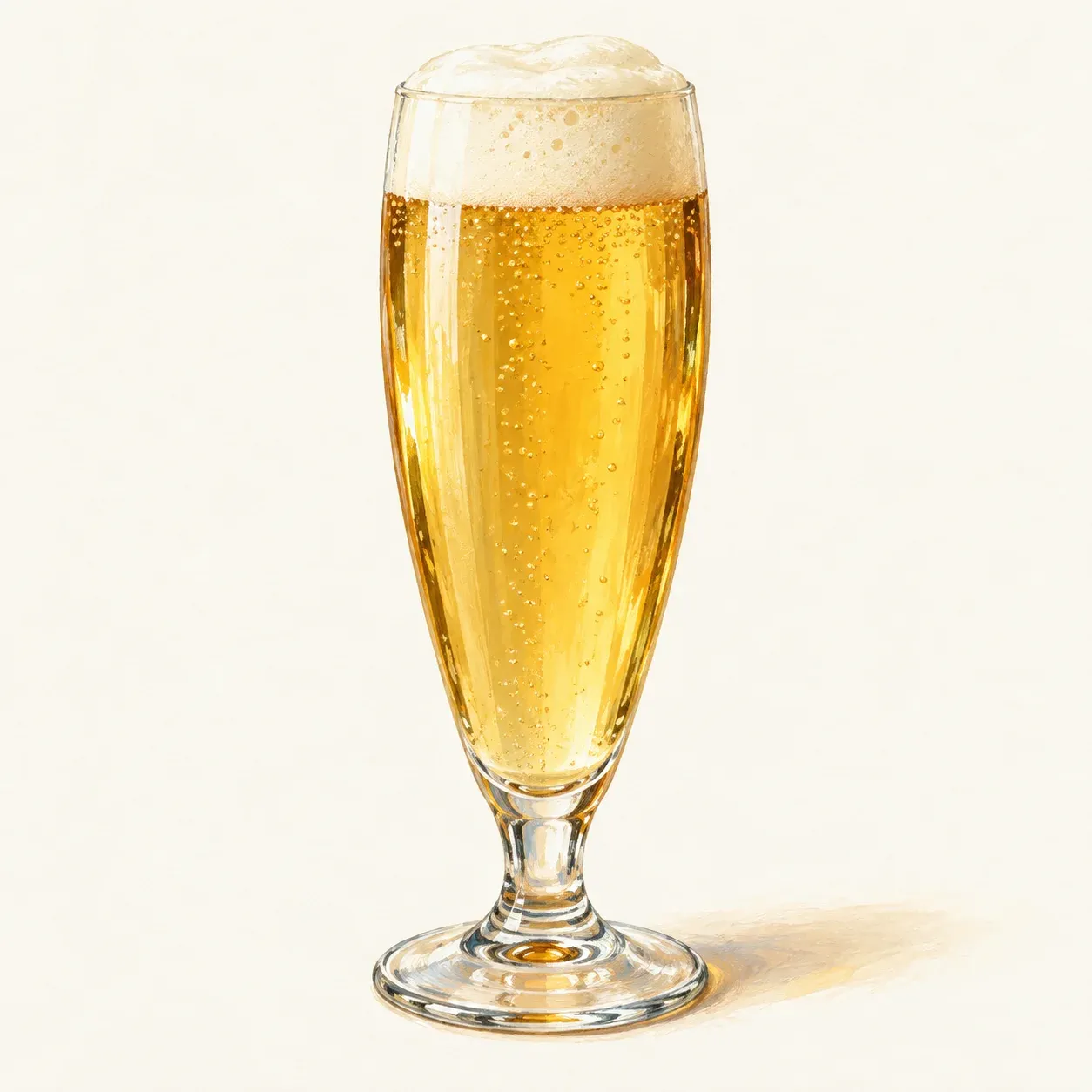
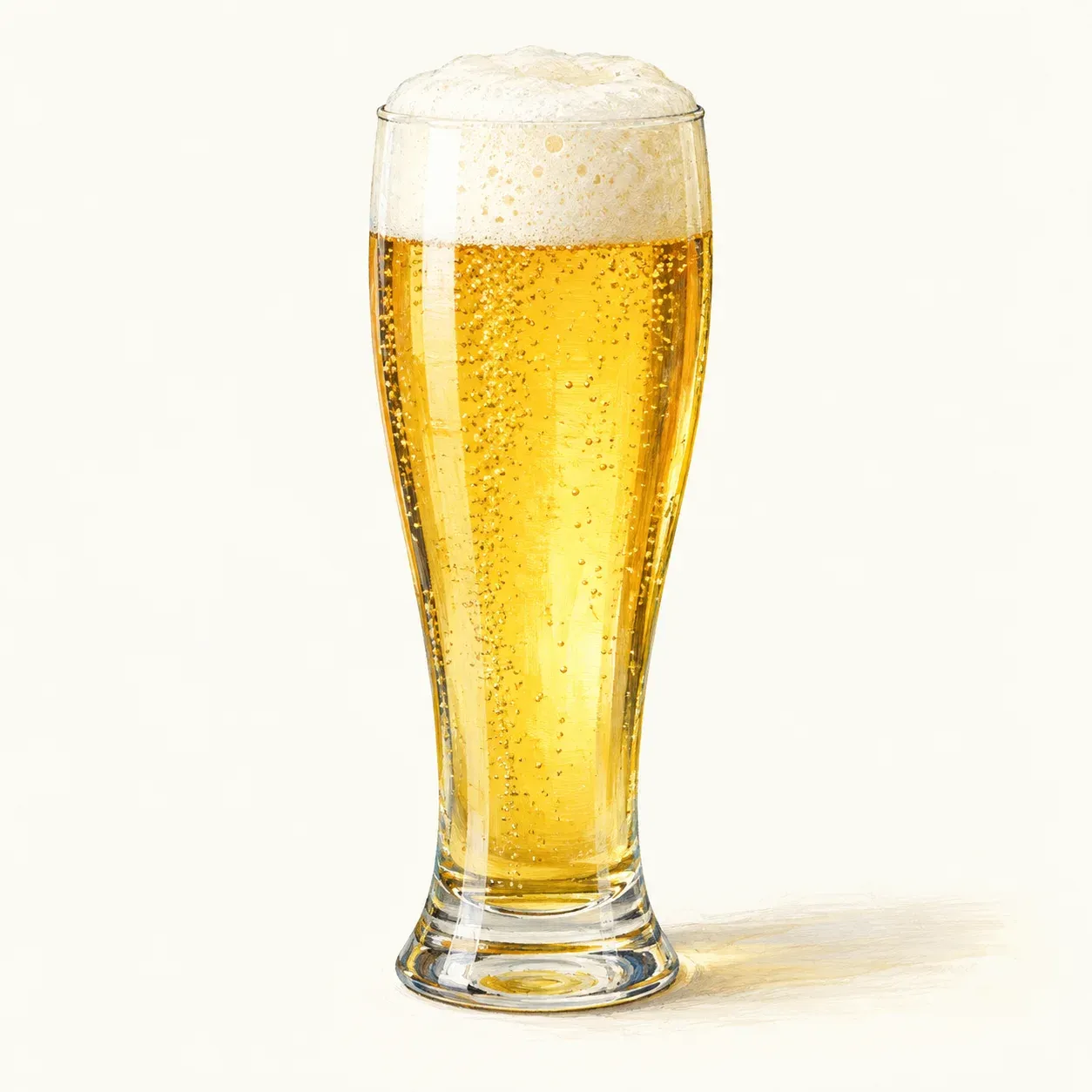
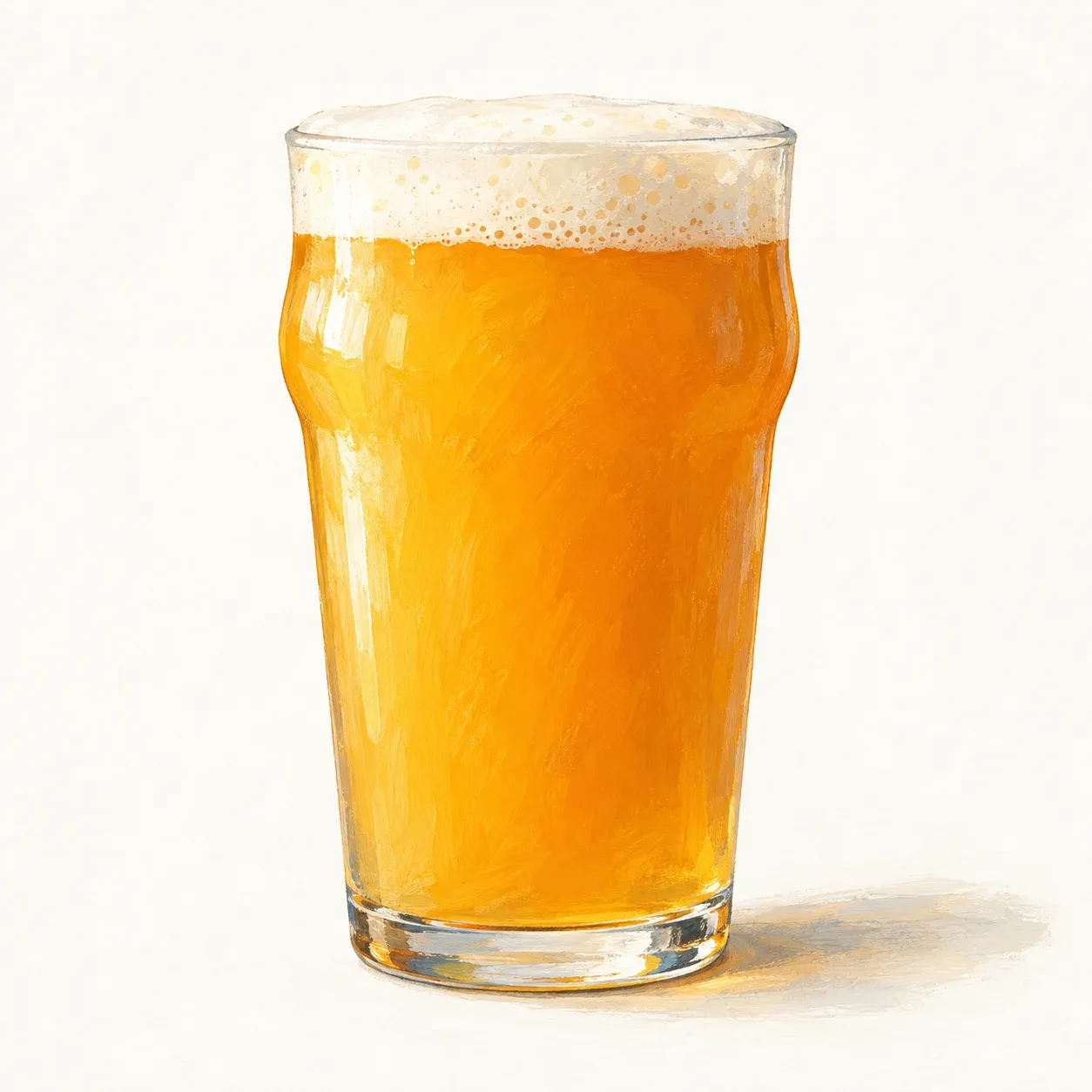
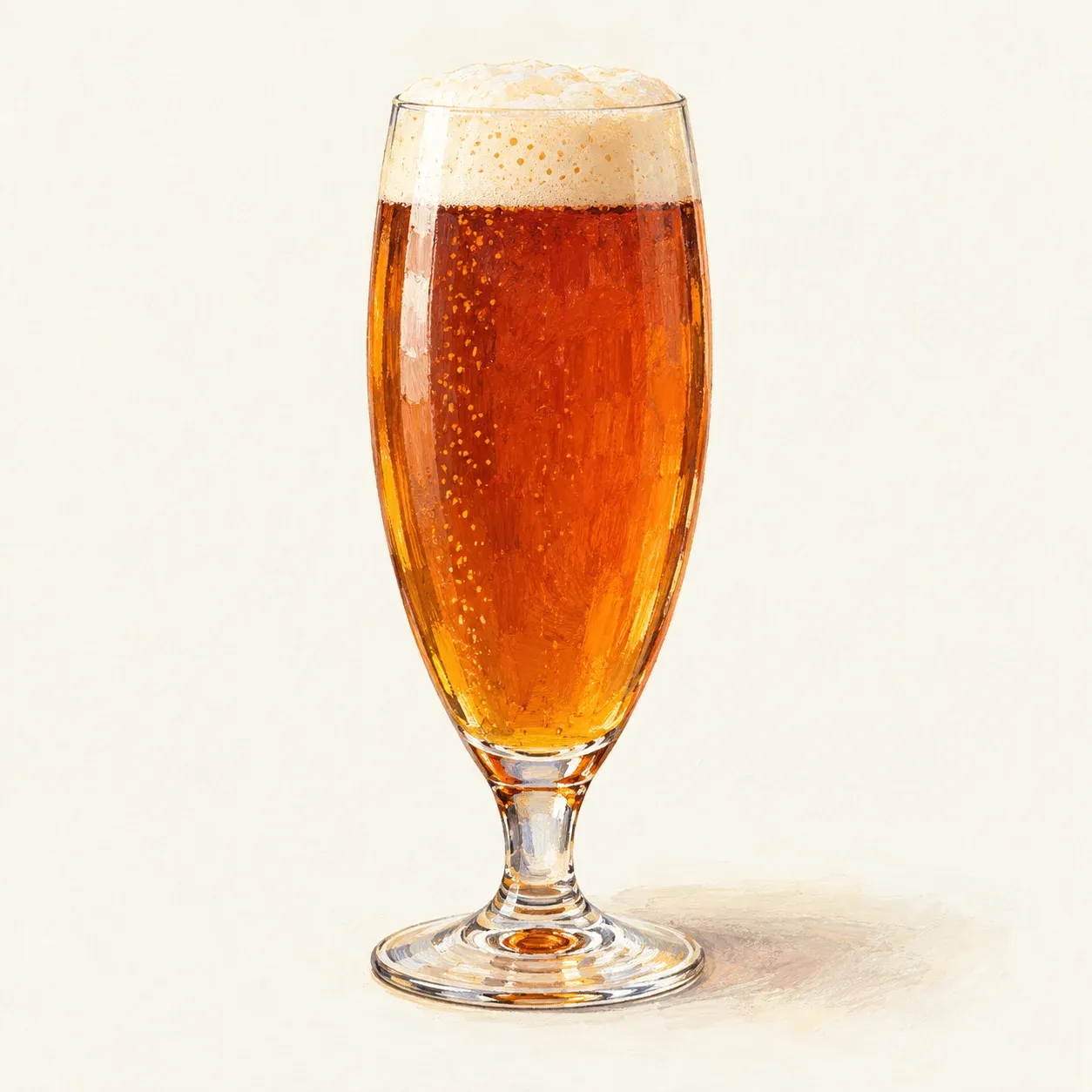
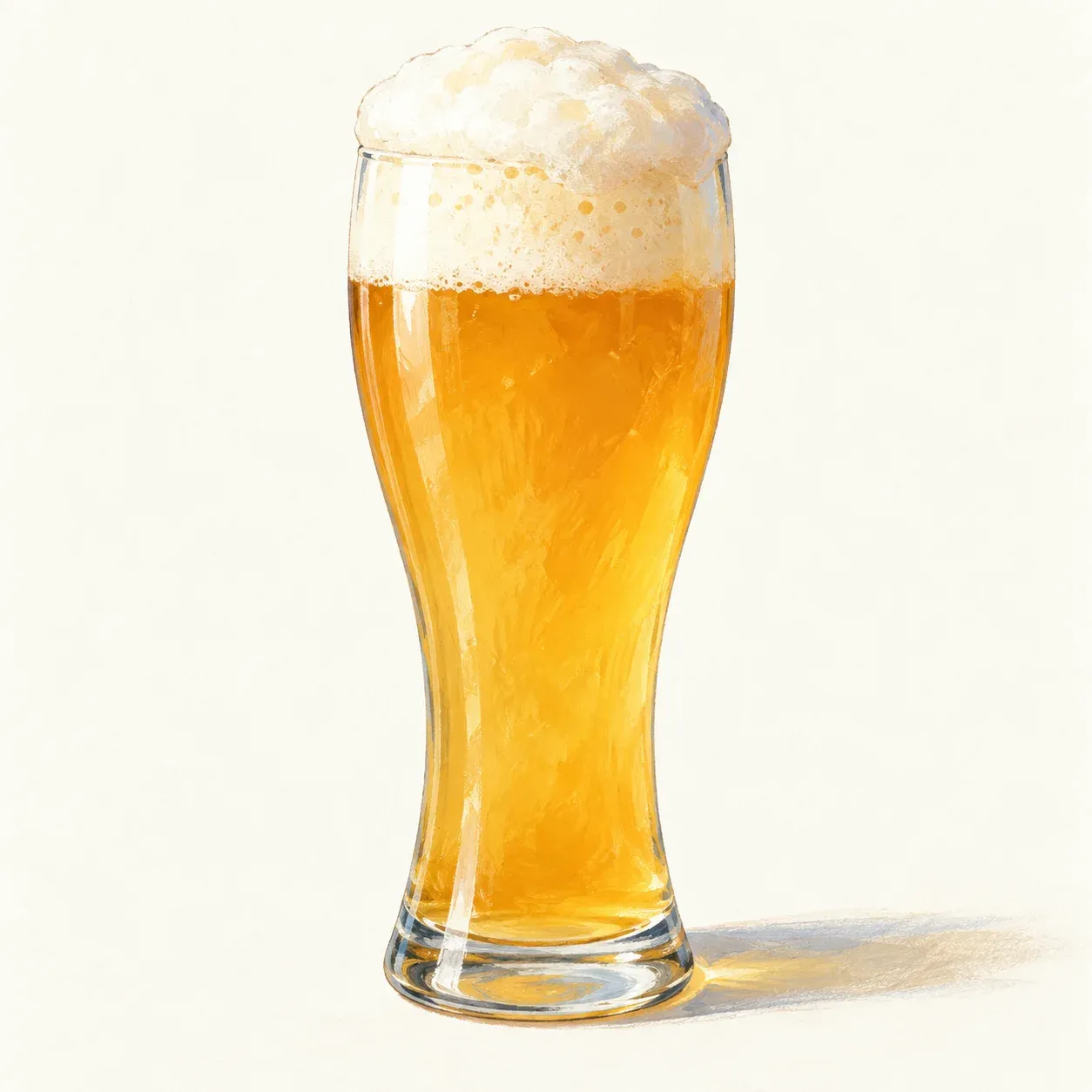
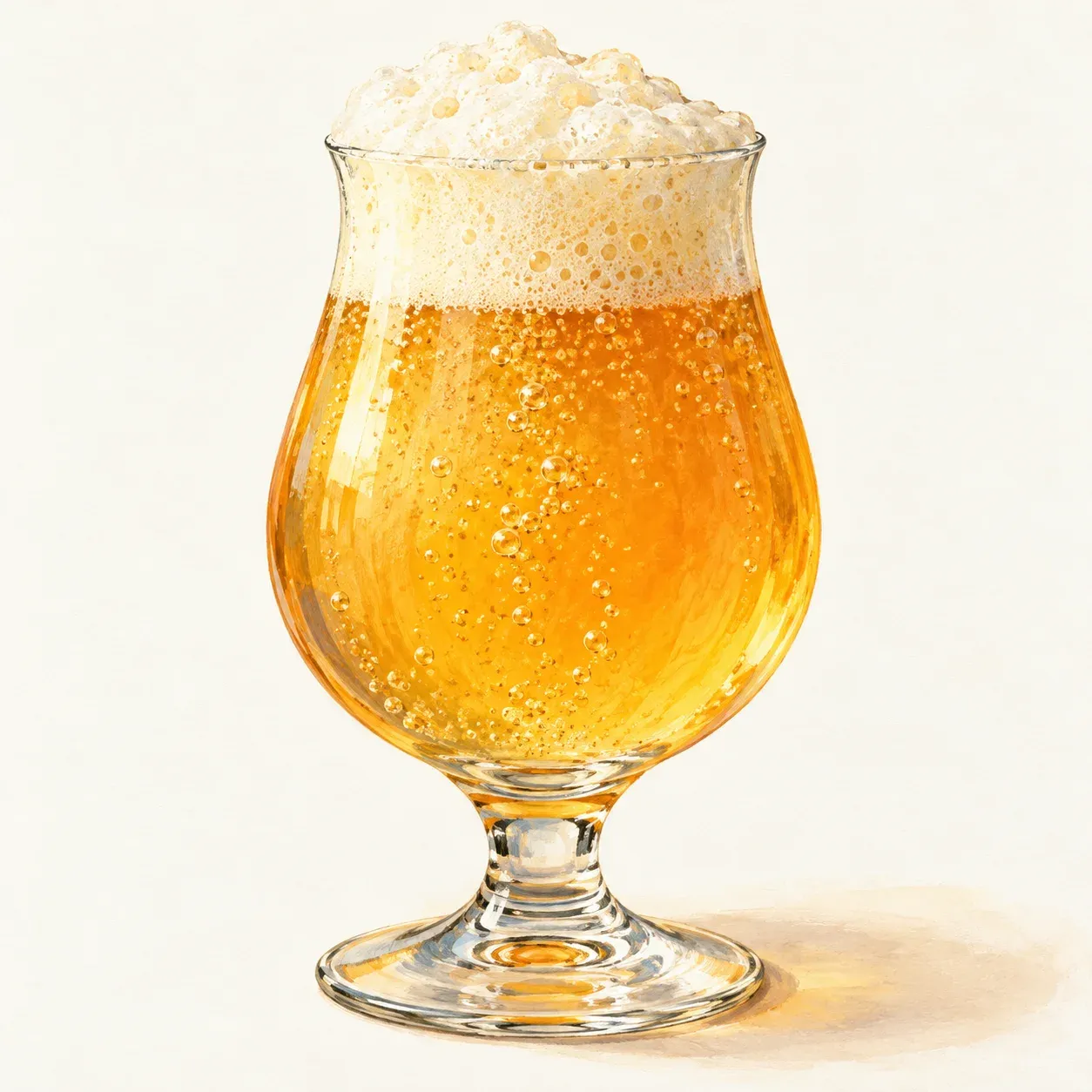
Pour it at 4–7 °C into a tall pilsner glass or a flute, hard enough to raise a thick head. It suits shellfish, roast chicken and salads, and a mild white cheddar. Some Czech pubs pour kvasnicové versions, with a dose of fresh yeast added after fermentation: a little cloudy, with more hop aroma.
Next to its neighbours
Against a German Pils, a Czech pilsner has more colour, more malt and more body, and a fuller, softer finish. It is also stronger than the everyday Czech pale lager, výčepní pivo. Modern Czech brewers vary the balance: many of their beers lean further to malt than Pilsner Urquell does.
Czech Pilsner in numbers
- Classic example
- Pilsner Urquell
- Original gravity
- 1.044–1.060
- Final gravity
- 1.013–1.017
- Czech names
- světlý ležák (11–12.9 °P); světlé speciální pivo (13–14.9 °P)
- Food
- Shellfish, chicken, salads; mild white cheddar
- Classic examples
- Pilsner Urquell; Budvar 33 světlý ležák; Bernard Sváteční ležák; Primátor Premium; Radegast Ryze hořká 12; Únětická 12°
- BJCP style
- 3B Czech Premium Pale Lager
Sources
Checked .
- 3B. Czech Premium Pale Lager, 2021 Beer Style Guidelines — Beer Judge Certification Program
- Bohemian-Style Pilsener — CraftBeer.com, Brewers Association
- Josef Groll's Barley — Pilsner Urquell