1842: how Plzeň gave the world golden lager
The birth of Pilsner: 36 barrels poured away in 1838, a new brewery, a Bavarian brewer called Josef Groll, and the first golden lager, served on 11 November 1842.
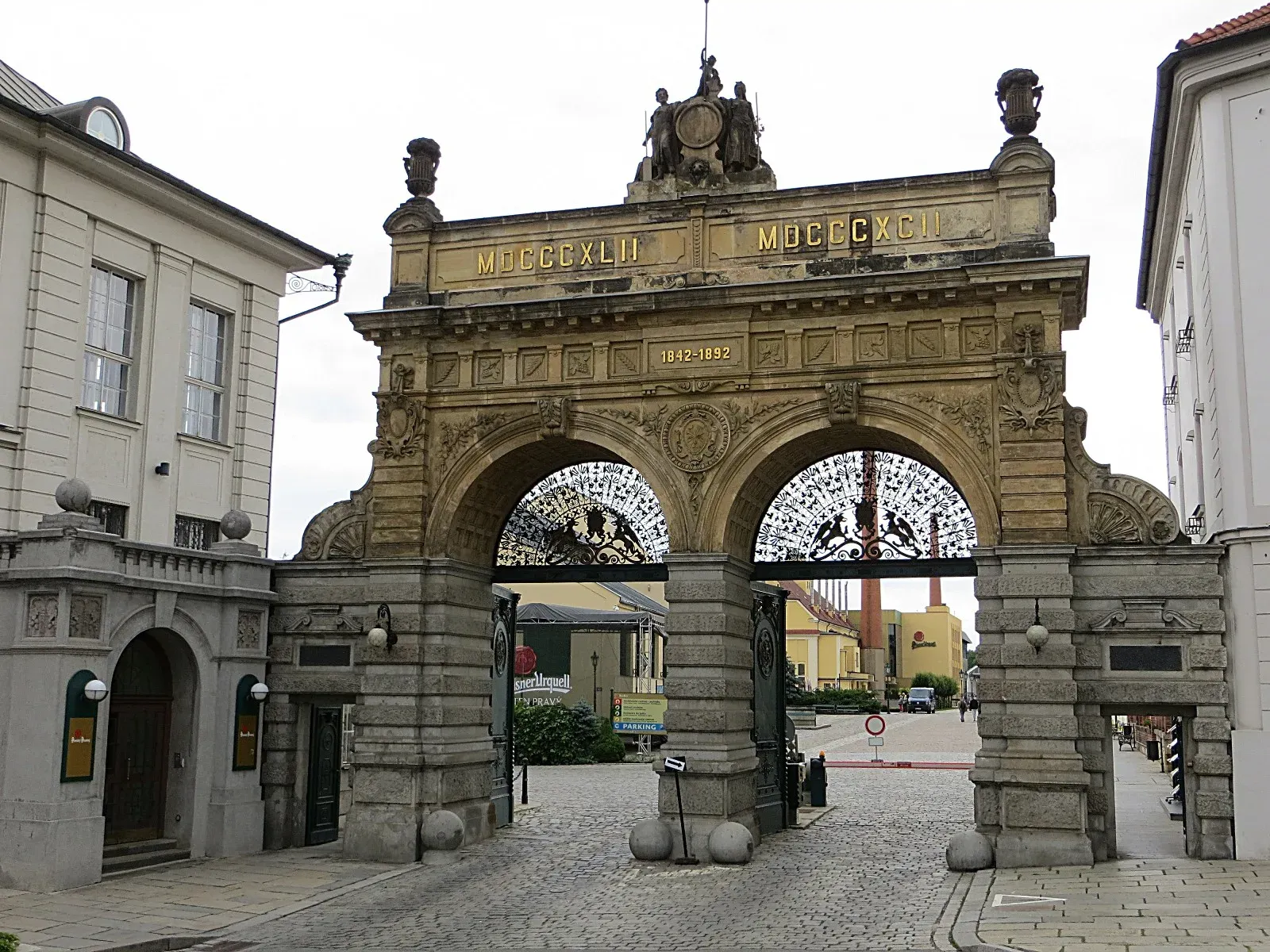
In 1838 the tavern owners of Plzeň (Pilsen), in Bohemia, poured 36 barrels of the town’s beer down the drains. It was sour and undrinkable, probably a warm-fermented wheat beer. Four years later the same town served the first golden lager, and most of the beer the world drinks today descends from it.
A brewery built from scratch
Plzeň’s drinkers had heard of the new cold-fermented beer brewed in Munich, and the town’s businessmen and tavern owners raised money to build their own brewery, the Burghers’ (Citizens’) Brewery. They hired the architect Martin Stelzer, who toured breweries in Europe and Britain to study the new tools of the Industrial Revolution: pure yeast, steam power and refrigeration. He chose a site with soft water and sandstone ground, deep enough for cellars where the beer could lager in the cold. From Bavaria he brought back a brewer who knew how to make cold-fermented beer: Josef Groll.
The first golden beer
Groll unveiled the first batch at the Martinmas Fair on 11 November 1842. It astonished the town. The lagers of Bavaria at the time were russet to brown, because their malt dried over wood fires. Groll’s beer shone gold: the first pale beer central Europe had seen.
A local legend says the brewery received the wrong malt by mistake. The Oxford Companion to Beer calls that fanciful and points to a likelier cause: Stelzer probably brought back from England a malt kiln heated indirectly by coke, the kind English maltsters used for the pale malt of their pale ale. Pilsner Urquell adds that Groll almost certainly malted Haná, a barley from the plains of Moravia, low in the nitrates that cause haze. Soft local water, the spicy Saaz hops of Žatec, a slow decoction mash and cold cellars did the rest.
Why it spread
The new beer arrived just as factories began making glass cheaply. Until then most drinkers had used earthenware tankards, and glass belonged to the rich. In a clear glass you could see that Plzeň’s beer sparkled, where older beers looked cloudy, and its fame spread fast.
The brewery’s beer became Pilsner Urquell. In the Czech Republic only Pilsner Urquell and Gambrinus carry the name Pilsner. German brewers adapted it to their harder water from the early 1870s, as German Pils; later brewers around the world turned it into the international pale lager. The original style lives on as Czech Pilsner.
Sources
Checked .
- Pilsner Urquell — The Oxford Companion to Beer, Oxford University Press
- 3B. Czech Premium Pale Lager, 2021 Beer Style Guidelines — Beer Judge Certification Program
- Josef Groll's Barley — Pilsner Urquell
Image credits
- The gateway of the Pilsner Urquell brewery in Plzeň, with the years 1842 and 1892 on its arch — Mister No. CC BY 3.0. Resized and converted to WebP
