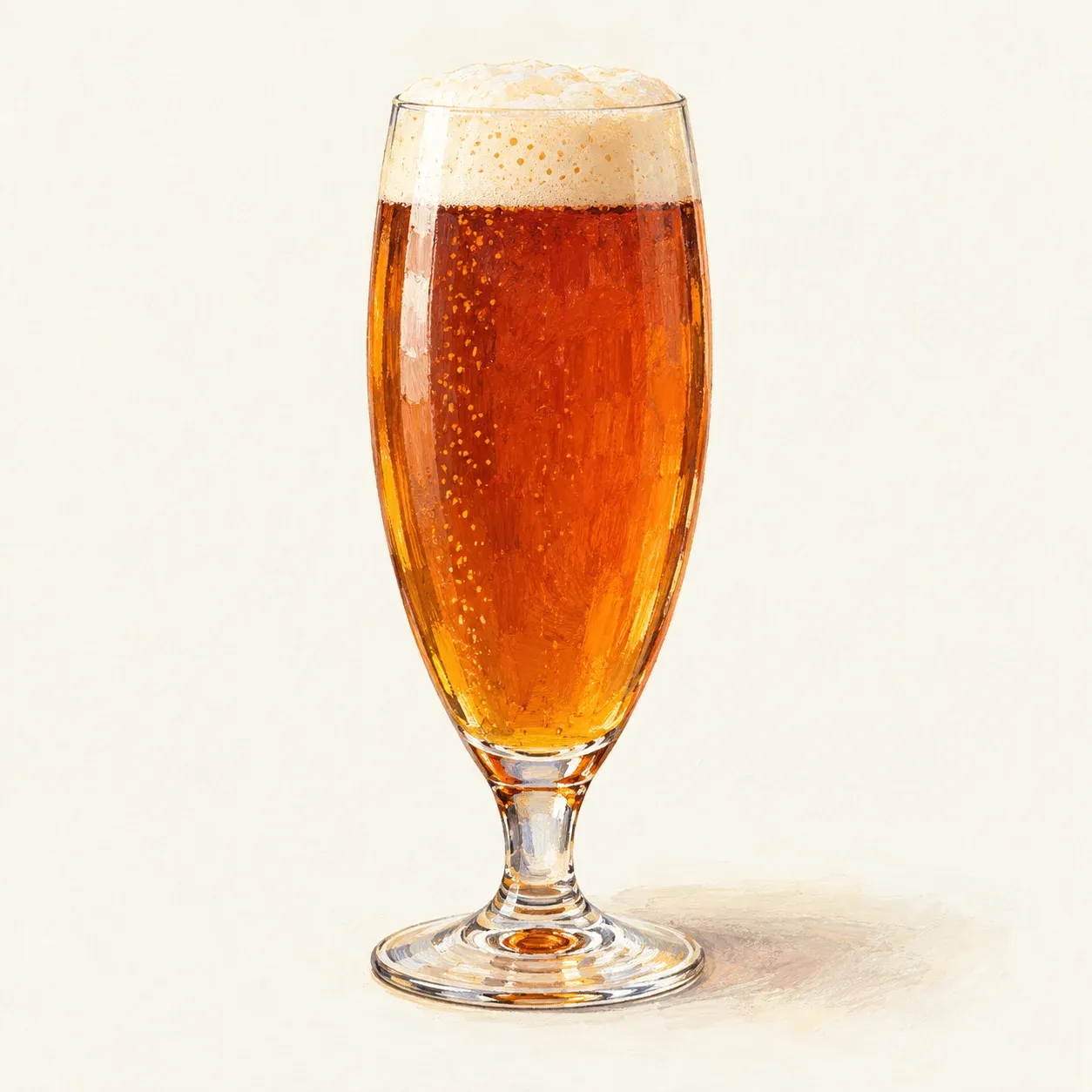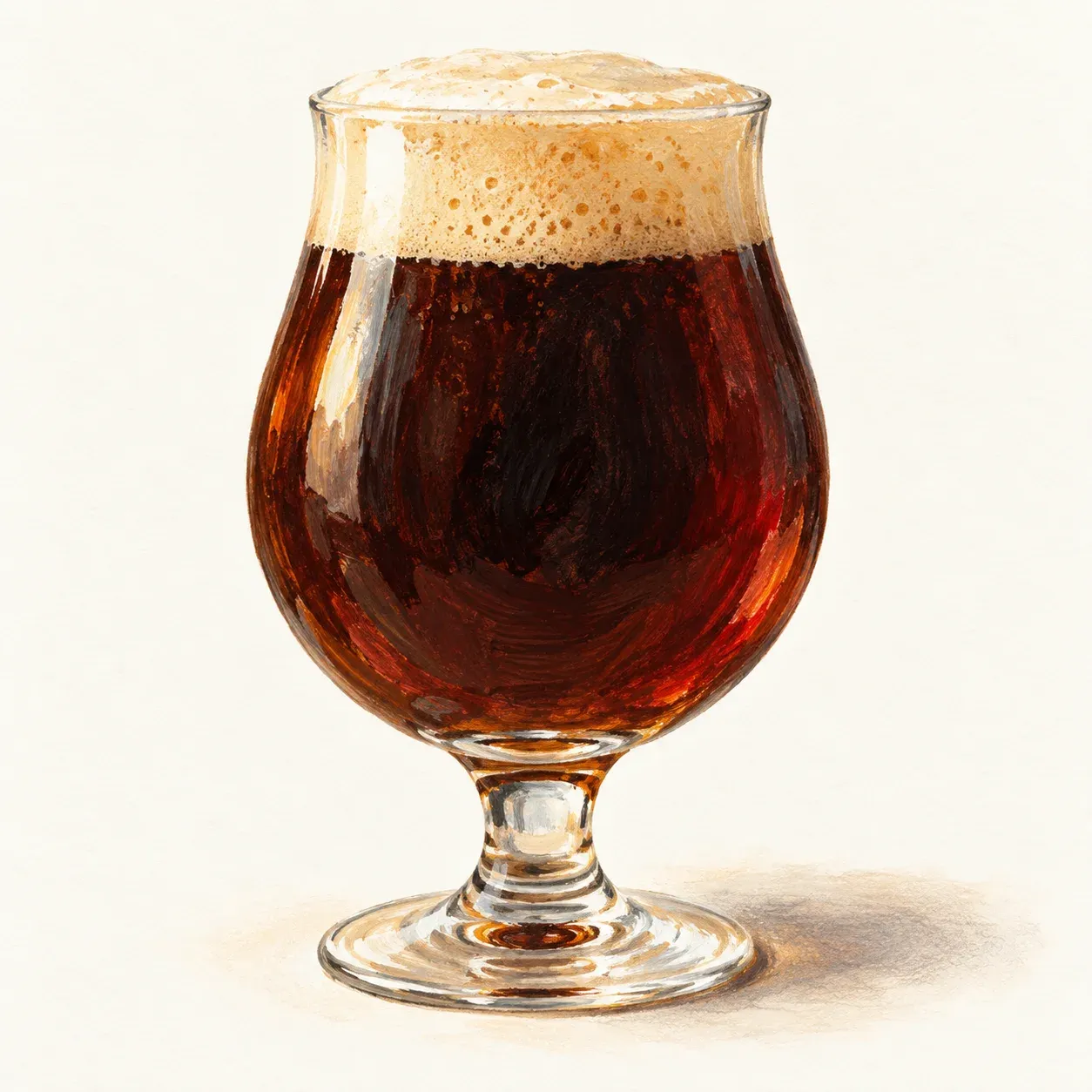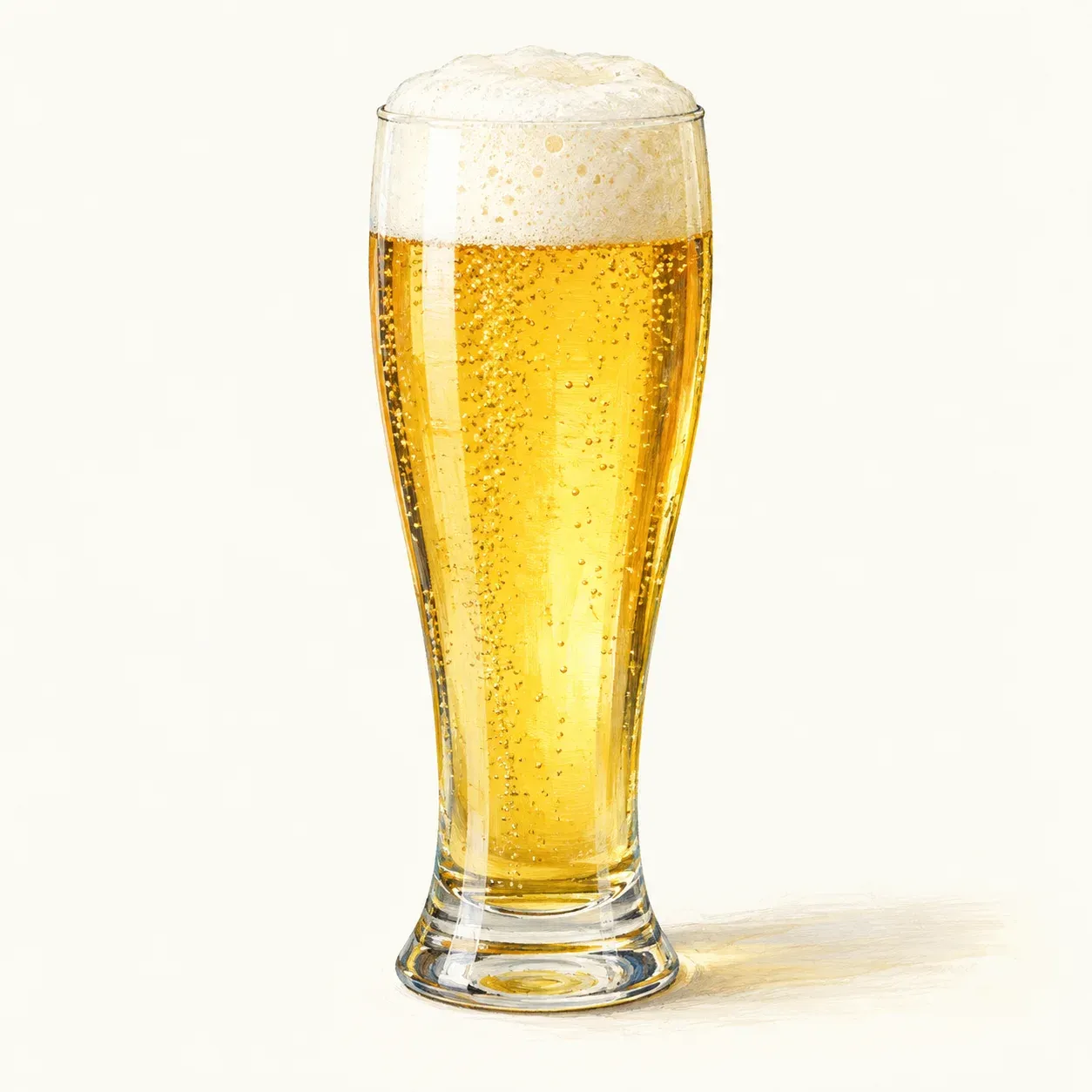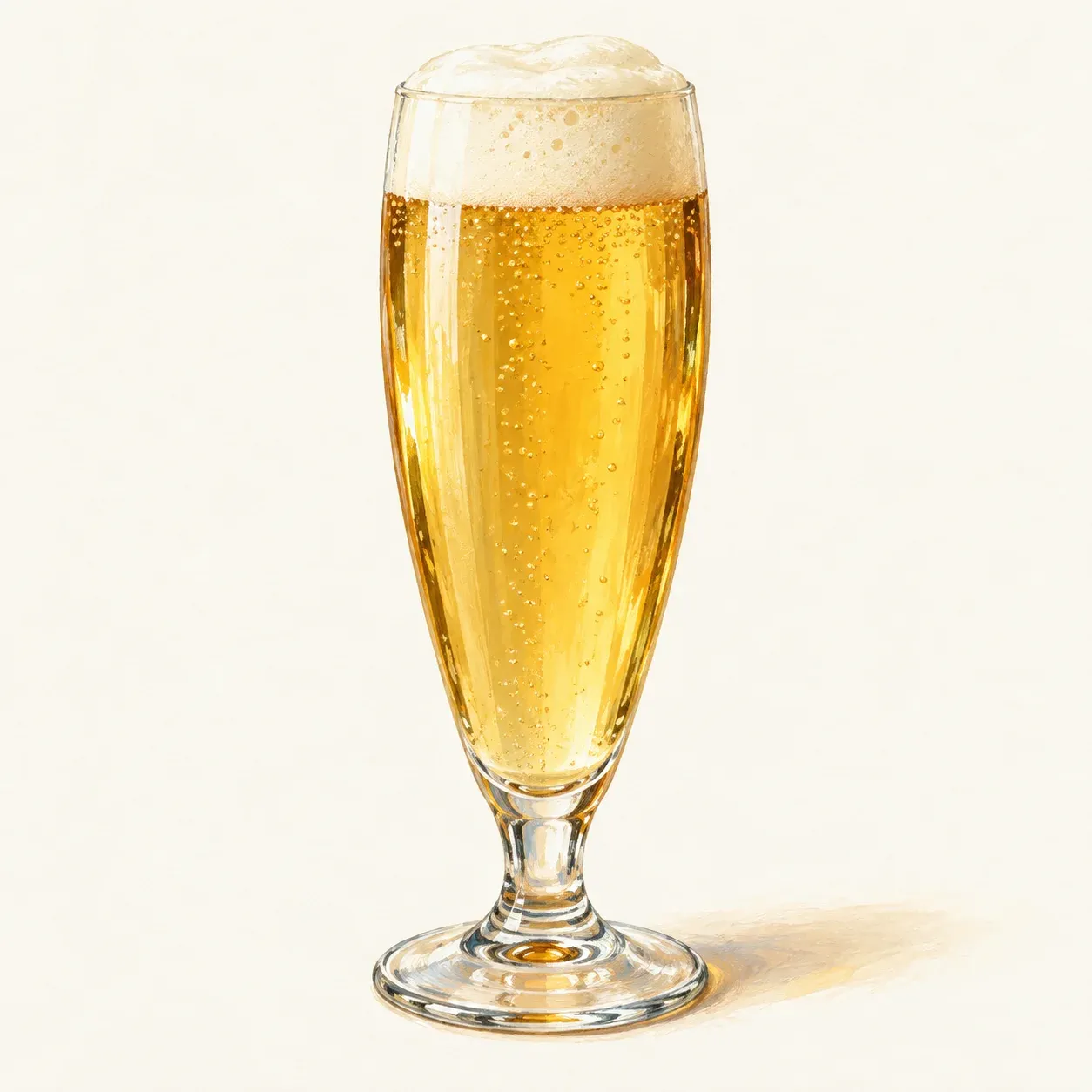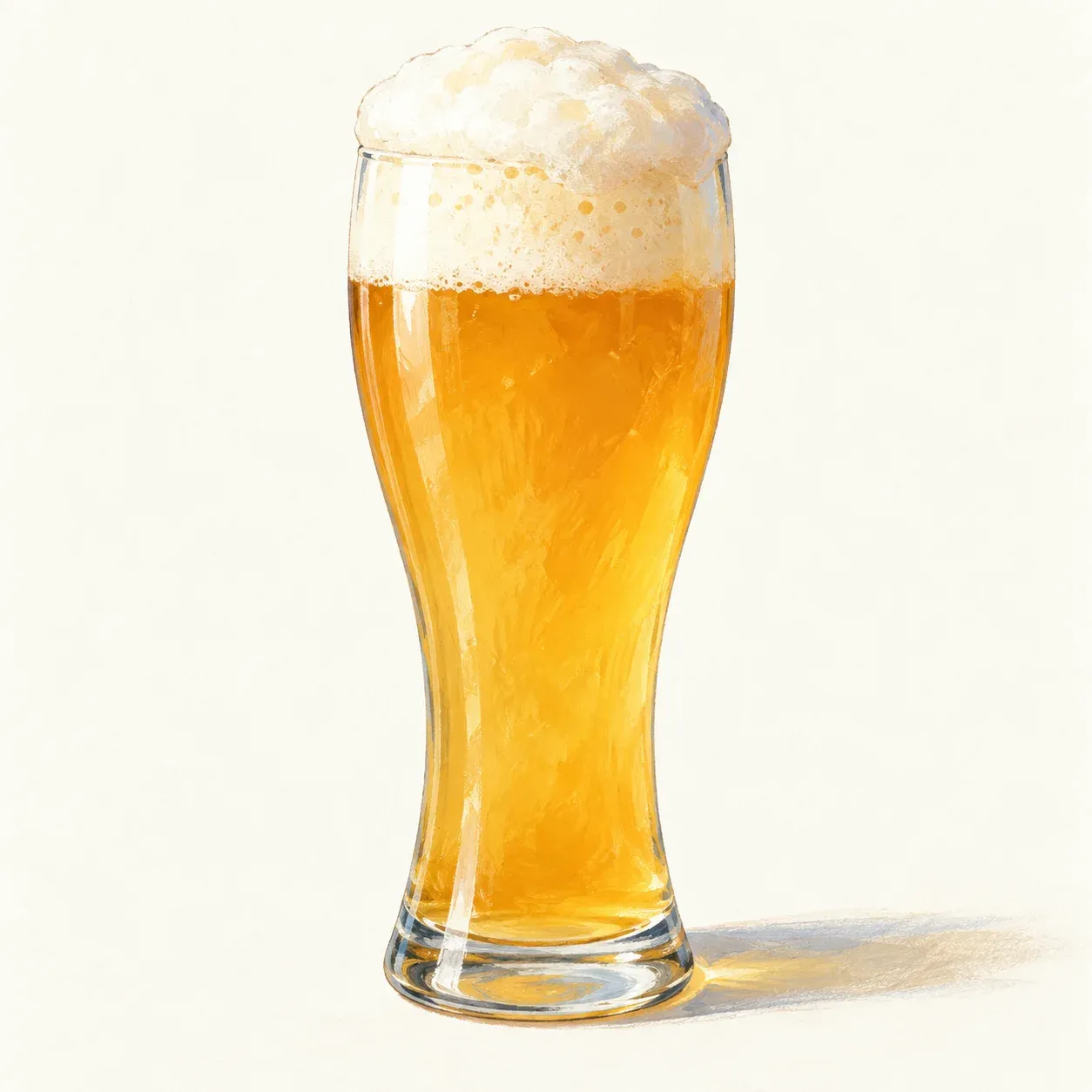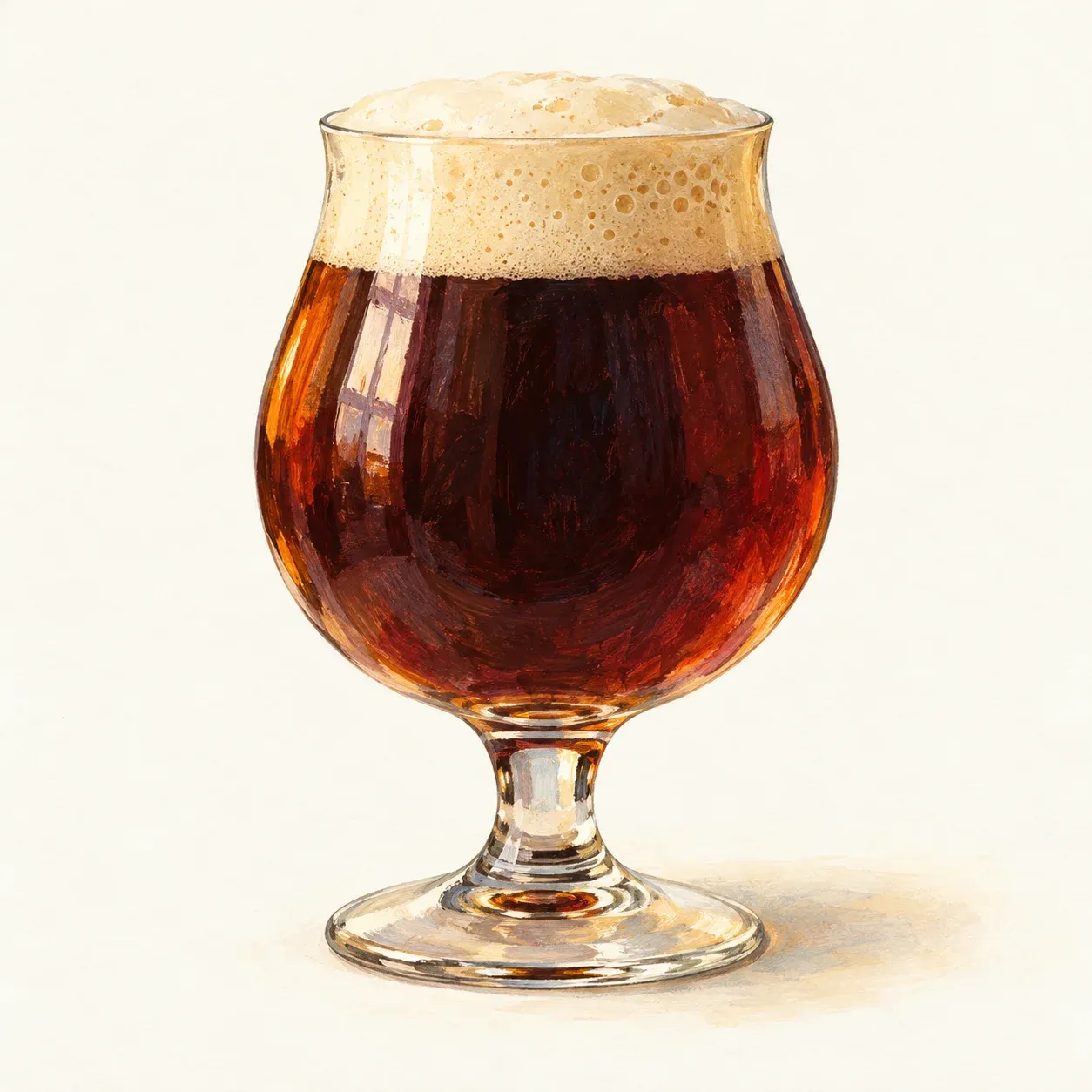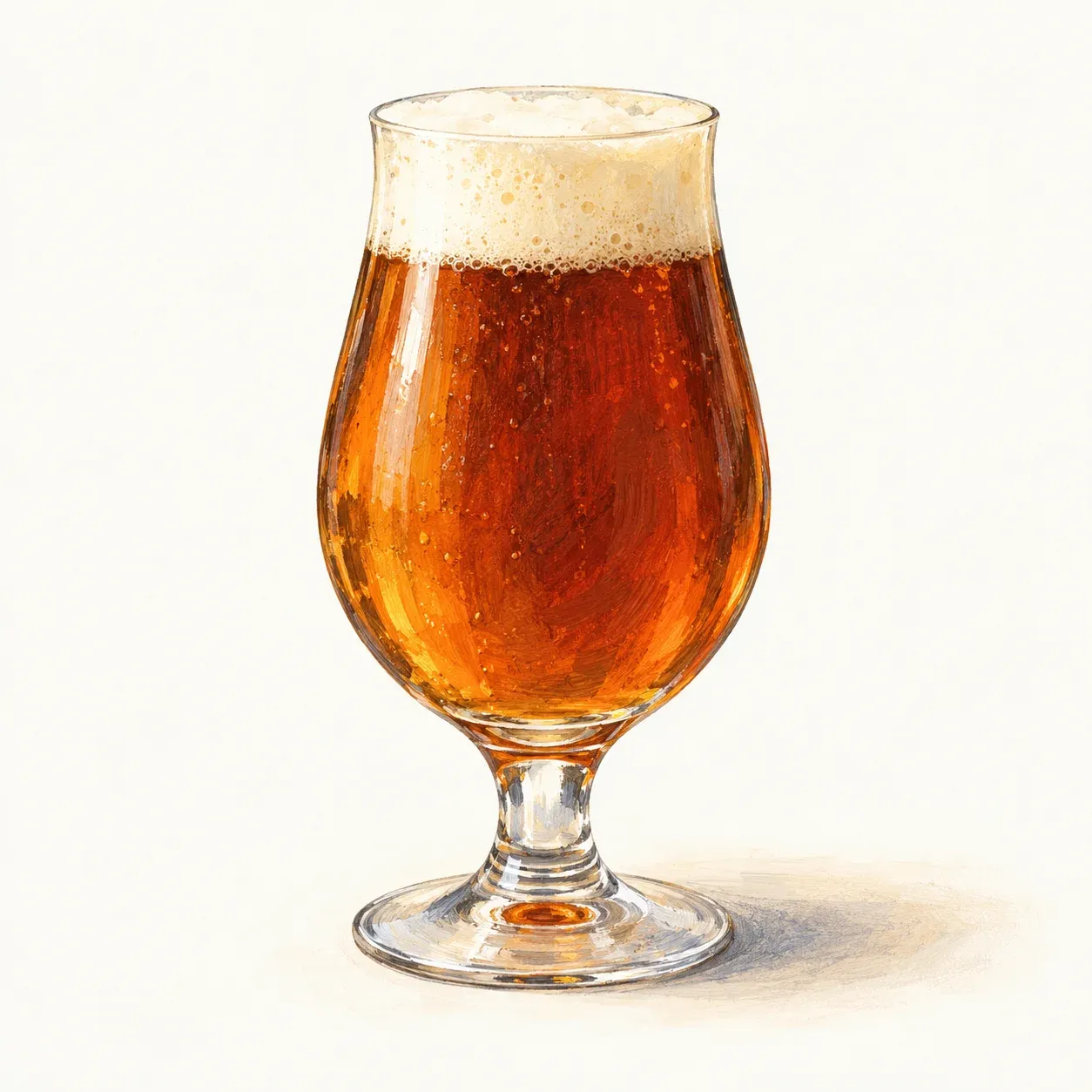
An Altbier pours amber to deep copper, most often bronze-orange, brilliant clear under a thick off-white head. You taste rich malt, bread and sometimes a nutty note, met by a firm bitterness and a peppery, spicy hop. The finish runs dry and long. Most versions balance at 25–35 IBU; Zum Uerige in Düsseldorf’s old town brews a much more bitter one.
Where it comes from
Alt means old, but the style dates from the late 19th century. Düsseldorf brewers developed it to compete with lager, using lager methods on an ale: they ferment it with ale yeast at cool temperatures, then condition it cold. Older beers brewed in the area have no direct link to the modern Alt.
The grist starts with German Pils malt, sometimes Munich, with a little crystal, chocolate or black malt for colour. Spalt hops are the traditional choice. In Düsseldorf’s Altstadt, the old town, the classic examples come from the cask.
How to serve it
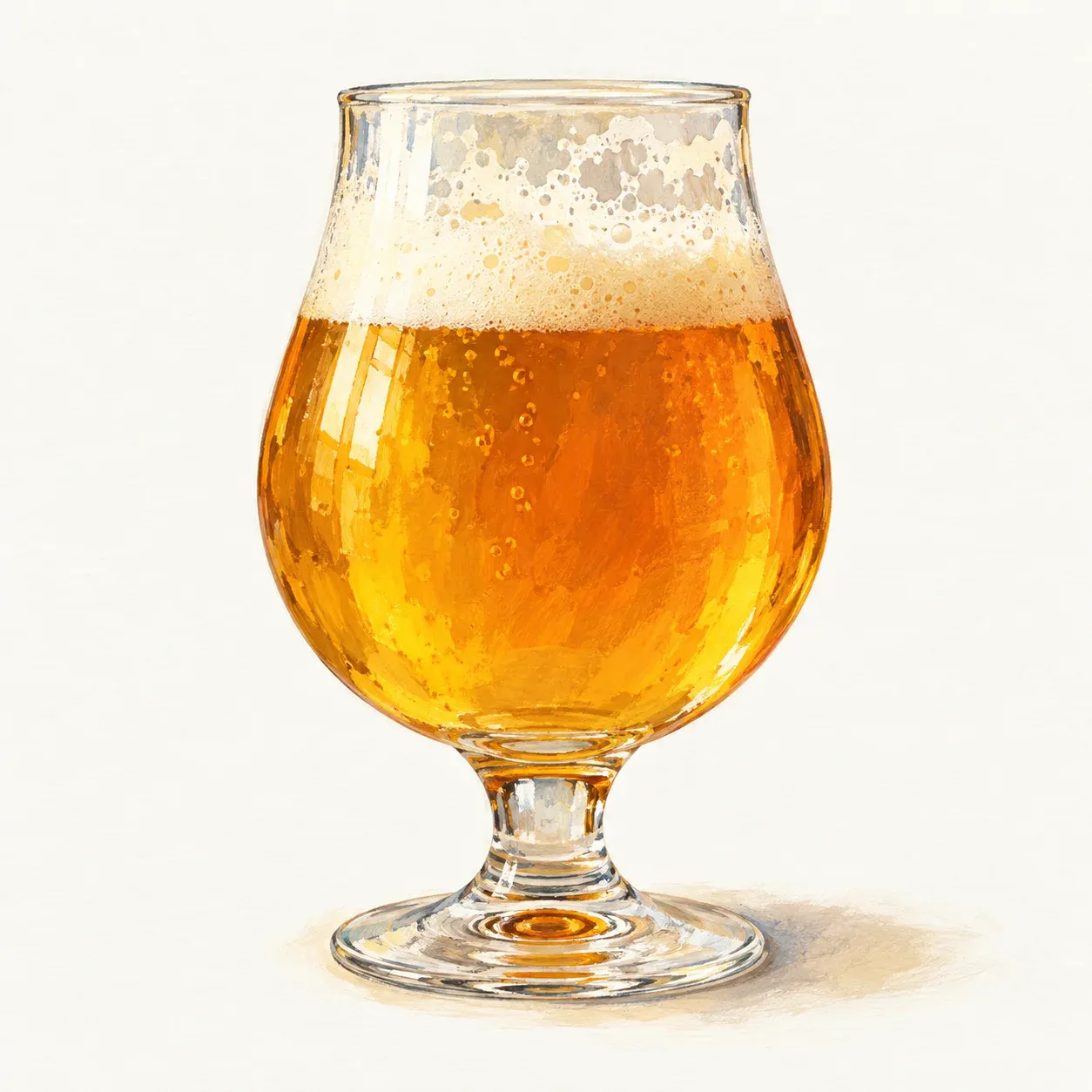
Pour it at 7–10 °C into a tulip glass. Try it with grilled salmon or an Emmental, and apple pie after.
Next to its neighbours
Altbier is the darker, more bitter cousin of Kölsch, brewed the same way. It is drier, richer and more bitter than a Vienna lager, and weaker and less malty than a dunkles bock. California common comes close in method, colour and flavour, with different ingredients.
Altbier in numbers
- Original gravity
- 1.044–1.052
- Final gravity
- 1.008–1.014
- Food
- Grilled salmon; Emmental; apple pie
- Classic examples
- Uerige Altbier; Füchschen Alt; Schumacher Alt; Schlösser Alt; Diebels Alt; Bolten Alt
- BJCP style
- 7B Altbier
Sources
Checked .
- 7B. Altbier, 2021 Beer Style Guidelines — Beer Judge Certification Program
- German-Style Altbier — CraftBeer.com, Brewers Association