The IPA myths: who really sent pale ale to India
India pale ale history: the beer nobody called IPA for 50 years, why George Hodgson did not invent it, and how a six-month voyage ripened it.
The Oxford Companion to Beer calls IPA the most romanticised, mythologised and misunderstood of all beer styles. The popular version is neat: a London brewer invented an extra-strong, extra-hoppy beer in the 1790s so it would survive the voyage to India. The real history is longer and stranger.
A name that came 50 years late
Nobody called it India pale ale until the beer had existed for at least 50 years. The East India Company, formed in 1600 to chase the spice trade, found its money in Indian textiles instead, and left traders, clerks and soldiers in coastal posts. They drank. Records show pale ale in India by 1716, when the Company scolded Joseph Collett, president of the Madras colony, over a drinks bill that included “24 dozen and a half of Burton Ale and pale Beer”.
By the 1780s, when Calcutta got its first newspapers, auction notices for ships’ cargoes listed pale ale, porter, cider and even small beer. Plenty of styles survived the journey. The first pale ale advertised there by name, in 1790, came from Bell’s, a Burton brewery.
Hodgson did not invent it
Many histories credit George Hodgson, whose brewery opened in 1752 near the East India Docks in London. He invented nothing. He brewed porter like every London brewer, but he knew the captains of the East Indiamen, offered them good terms and listened to what sold. His son Mark took the trade further, adapting the beer to the climate and the customers’ letters. By 1809 Hodgson’s ale filled the front of the Calcutta Gazette in block capitals, and soon no other pale ale appeared by name. The phrase East India Pale Ale first turned up in British newspaper advertisements in the 1830s, when Hodgson sold his beer at home to families back from India.
The beer the sea finished
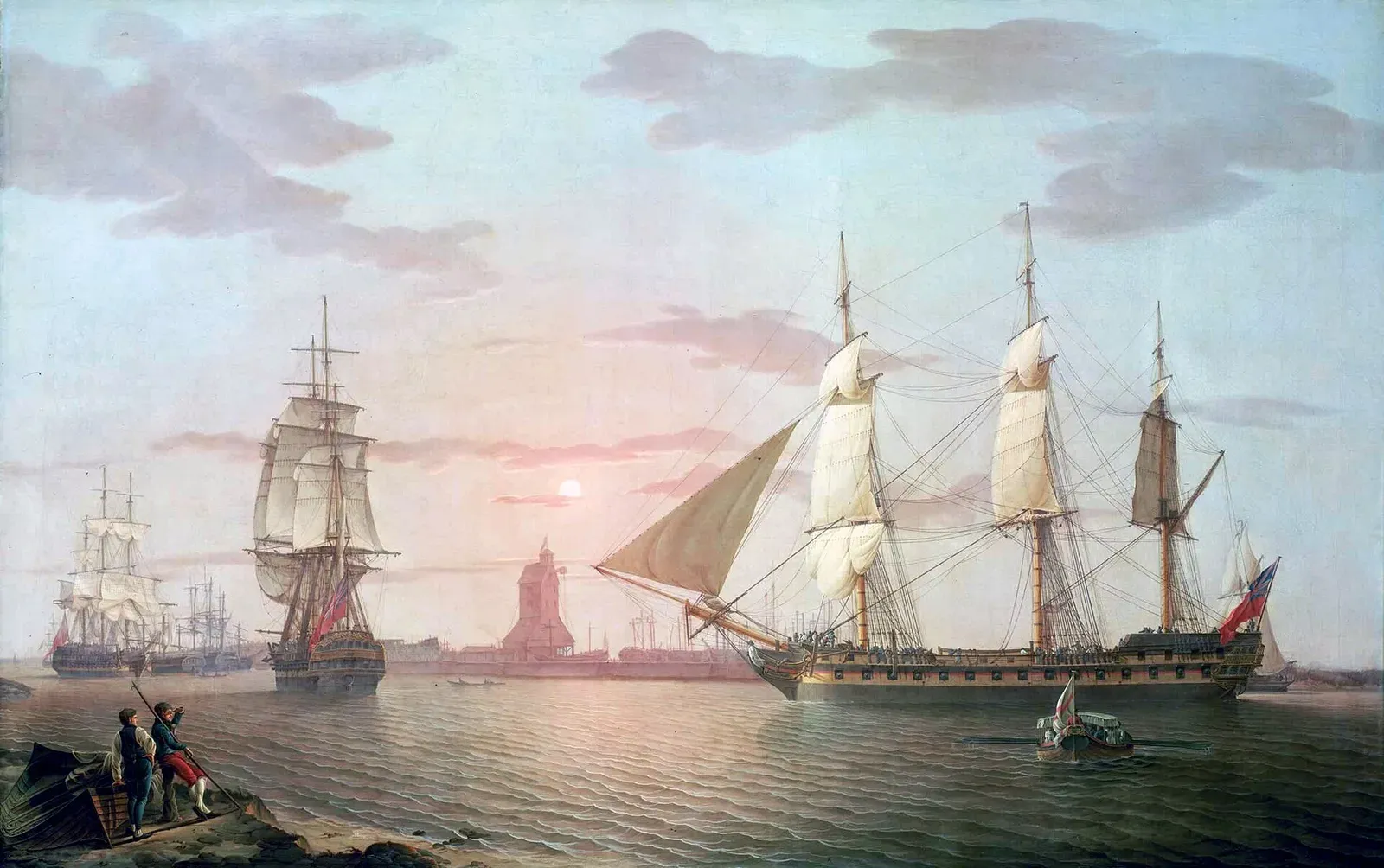
The ancestors of IPA were the country-house October beers, strong, well-hopped ales that their owners matured in the cellar for a year and a half or more. Shipped young, they reached India “ripe”. The voyage took about six months: out into the Atlantic, often across to Brazil, back round the Cape of Good Hope and across the Indian Ocean, through swings of up to 20 °C and constant, often violent motion. On arrival, buyers tasted every shipment before the auction. Most arrived in perfect condition, sold as “fully ripened”.
The beer got stronger and hoppier because brewers knew alcohol and hops kept beer sound. That much of the popular story is true. The rest, the single inventor and the single date, is legend.
From India to the craft taproom
IPA boomed in the late 19th century, then shrank to a pale shadow of itself for most of the 20th. American craft brewers brought it back: the BJCP credits Anchor Liberty Ale, brewed in San Francisco in 1975 with whole Cascade hops, as the first modern American version. It became the American IPA, then the hazy IPA, and the most popular craft beer style in the world.
Sources
Checked .
- India pale ale — The Oxford Companion to Beer, Oxford University Press
- 21A. American IPA, 2021 Beer Style Guidelines — Beer Judge Certification Program
Image credits
- An East Indiaman, the Warley, under sail: a painting by Robert Salmon — Robert Salmon. Public domain. Resized and converted to WebP
