How beer is made, from barley to glass
How beer is made: malting, mashing, lautering, boiling with hops, fermenting, conditioning and packaging, step by step in plain English.
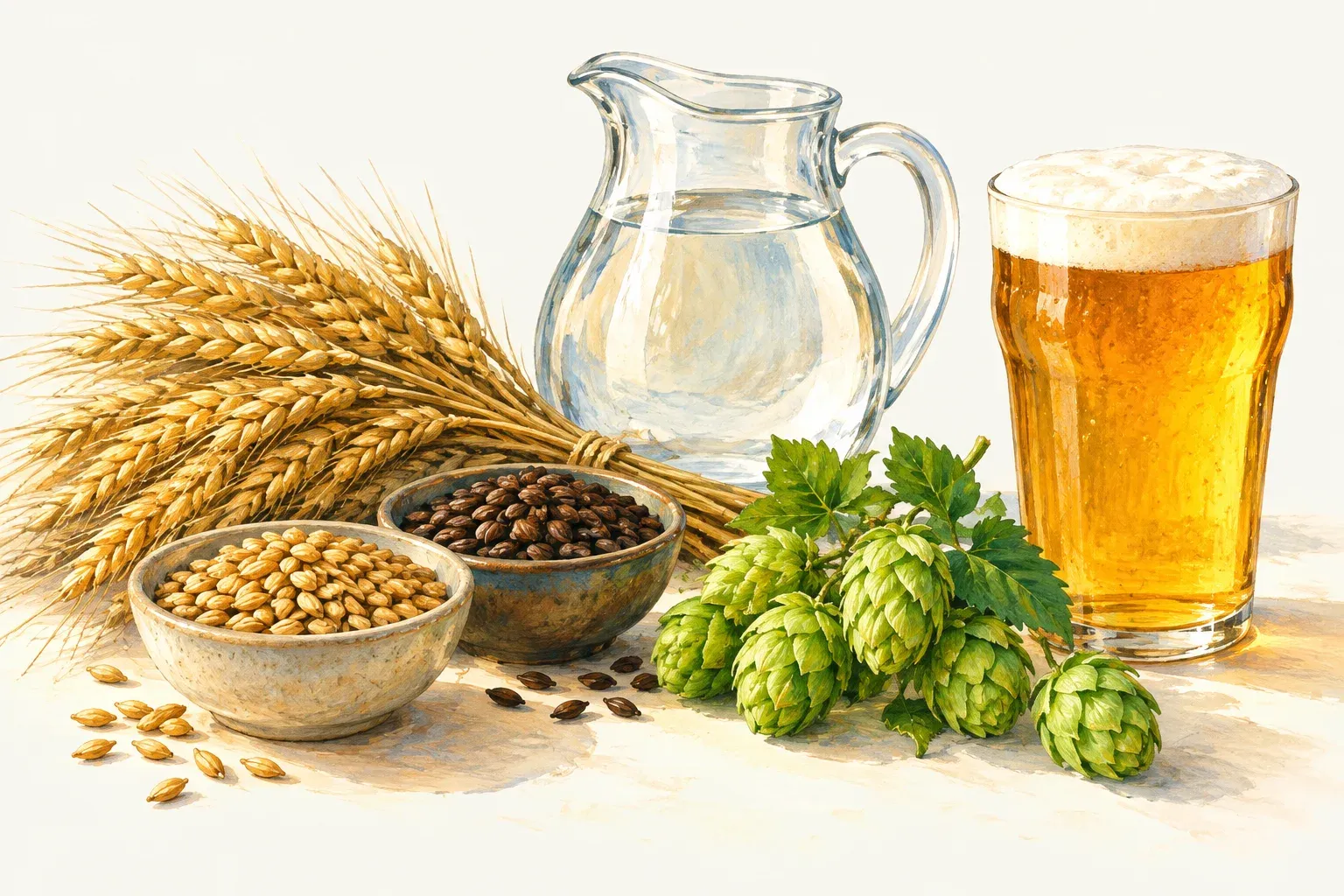
Beer needs four things: grain, water, hops and yeast. Everything a brewer does turns starch in the grain into sugar, and lets yeast turn that sugar into alcohol.
1. Malting
The maltster soaks barley in water until it starts to sprout, then dries it in a kiln. Sprouting wakes up the enzymes that will later turn starch into sugar. The kiln sets the colour and flavour: dried gently, the grain becomes pale Pilsner malt; heated longer and hotter, it turns amber, brown or, roasted, black.
2. Milling and mashing
The brewer cracks the malt in a mill, then mixes this grist with hot water in the mash tun. At the right temperatures the enzymes break the starch into sugars, some the yeast can ferment and some, the dextrins, it cannot; those stay in the beer as body. German lager brewers often use a decoction mash, boiling part of the mash and returning it, for a deeper malt flavour.
3. Lautering
The brewer drains the sweet liquid, now called wort, away from the spent grain, and rinses the grain with hot water, called sparging, to collect the last of the sugar.
4. The boil
The wort boils with hops. Hops added early give bitterness, because boiling turns their alpha acids bitter; hops added near the end give flavour and aroma. The boil also sterilises the wort and settles out proteins.
5. Cooling and fermenting
The brewer cools the wort and adds yeast, called pitching. Ale yeast works warm and fast, lager yeast cool and slow. Over days or weeks the yeast eats the sugar and makes alcohol, carbon dioxide and many of the beer’s flavours: fruity esters, spicy phenols. Brewers of lambic add no yeast at all and let wild microbes do the work.
6. Conditioning
The new beer matures. Lager brewers store it cold for weeks, the lagering that gives lager its name. Others dry-hop it, age it in barrels or carbonate it with a little extra sugar in the cask or bottle.
7. Packaging
Finally the beer goes into kegs, casks, bottles or cans, often filtered and sometimes pasteurised. Bottle-conditioned beers, such as many Belgian ales, keep live yeast and a sediment.
Sources
Checked .
- Introduction to Beer Styles — Beer Judge Certification Program
- Beer Glossary — CraftBeer.com, Brewers Association